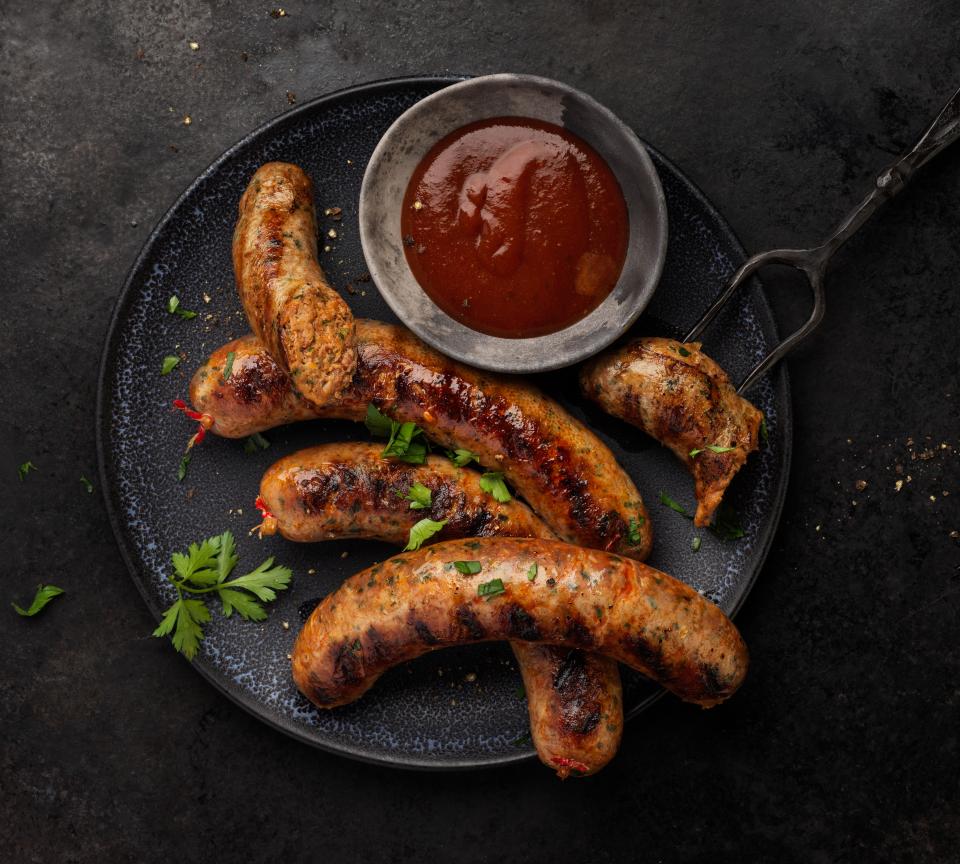
Pork Sausage

Yield: about 2.5 kg finished sausage (≈5.5 lb), ~20–24 links (6–8 in each)

Ingredients

  • 2.0 kg (4.4 lb) pork shoulder, partially chilled/frozen (about 80/20 lean-to-fat)
  • 0.5 kg (1.1 lb) pork fatback or additional fatty pork
  • 40 g kosher salt (≈2½ tbsp)
  • 5 g Prague Powder #1 (optional cure) — follow manufacturer dosing if used
  • 12 g sugar (≈1 tbsp)
  • 12 g ground black pepper (≈2 tbsp)
  • 10 g garlic powder (≈2 tsp) or 30 g fresh garlic, minced
  • 8 g smoked paprika (≈1½ tsp)
  • 6 g dried thyme (≈1½ tsp)
  • 6 g ground coriander (≈1½ tsp)
  • 4 g ground nutmeg (≈3/4 tsp)
  • 200–300 ml cold water or crushed ice (for mixing)
  • Natural hog casings, soaked and rinsed (about 10–15 m / enough for yield) Optional finishing: apple juice or beer (50–100 ml) to add to mix or for poaching

Equipment (brief)

  • Meat grinder, sausage stuffer, thermometer, smoker or large pot

Method

  1. Prep
  • Soak and rinse natural hog casings in warm water; flush until clear. Keep refrigerated in salted water.
  • Chill grinder parts and bowls. Cut meat and fat into 2–3 cm cubes and keep cold.
  1. Cure & season
  • Toss cubed meat and fat with salt, optional Prague Powder #1, sugar, and all spices. Refrigerate for 20–30 minutes to let salt start extracting proteins.
  1. Grind
  • Grind the chilled meat/fat through a coarse plate, then once more through a medium plate for a slightly coarse texture. Keep everything cold; work quickly.
  1. Mix & bind
  • Place ground meat in a chilled bowl. Add cold water or crushed ice gradually while mixing by hand or low-speed mixer until the mixture becomes tacky and holds together (protein extraction), ~2–4 minutes. Do not overheat (keep <10 °C / 50 °F). Test-season by frying a small pat; adjust salt/pepper/garlic if needed and re-mix.
  1. Stuff
  • Load stuffer and slide casing onto stuffing tube, leaving a tail. Stuff the sausage firmly but without over-packing. Twist into links of preferred length (6–8 in typical). Prick visible air pockets with a sterile needle.
  1. Rest
  • Hang or refrigerate links on a tray uncrowded for 6–12 hours to let the casings dry and flavors meld.
  1. Cook options
  • Smoke: Preheat smoker to 110–130 °C (230–265 °F) for hot smoking. Smoke until internal temperature reaches 68–71 °C (155–160 °F). For firmer texture, raise heat briefly to 190–200 °C (375–400 °F).
  • Poach then brown: Gently poach sausages in simmering water (not boiling) to 68–71 °C (155–160 °F), then pan-sear or grill to color.
  • Roast/bake: Bake at 190 °C (375 °F) until internal 68–71 °C (155–160 °F), then brown under broiler or in skillet.
  1. Cool & store
  • Cool quickly if not serving immediately. Refrigerate up to 3–5 days (longer if cured and vacuum sealed) or freeze for months.

Notes & tips

  • Aim for a final fat content near 25–30% for juicy sausage. Adjust fat ratio if needed.
  • Keep all surfaces and meat cold to avoid smearing/fat separation and to reduce bacterial risk.
  • If using Prague Powder #1, follow manufacturer instructions exactly and label product as “cured.”
  • For flavor variation: add 50 g grated onion (excess liquid squeezed out), 30–50 g chopped fresh parsley, or 25–30 g fennel seed (toast and crush).

related blogs

Blog

Biltong Maker NZ: From Tradition To Innovation

At Kalahari Khabu, we don’t just make biltong; we live, breathe, eat, and sleep it. Our mission is to bring the world’s best biltong to ...
Read More →
Blog

Biltong Vs. Jerky: Understanding The Differences

Discover the key biltong vs. jerky differences, from their origins and preparation methods to taste and texture. Learn why these dried meats are uniquely delicious.
Read More →
Blog

The Ultimate Guide To Making Traditional South African Biltong At Home

At its heart, the art of making biltong connects us to centuries of tradition, heritage, and mouthwatering flavour. This beloved South African delicacy has travelled ...
Read More →
Shopping Cart
Scroll to Top