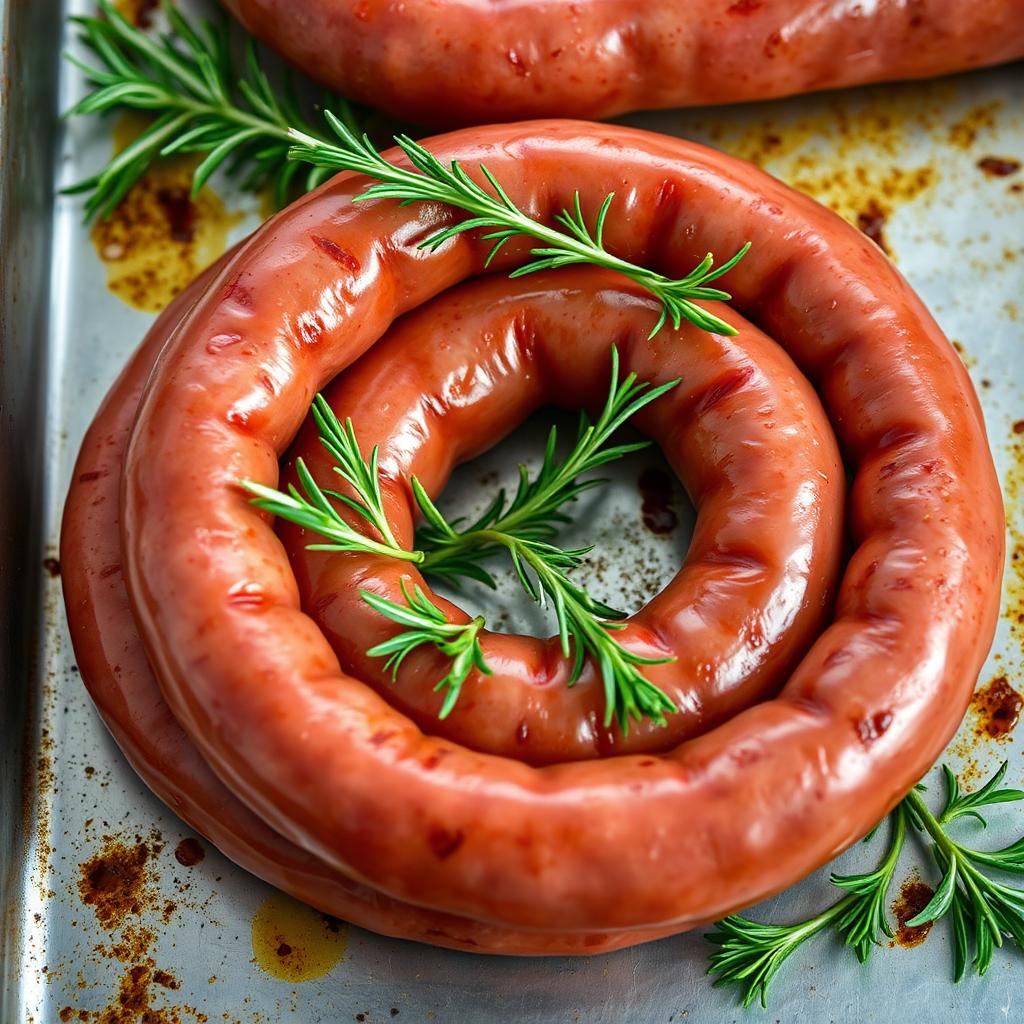
Polish Kielbasa (Swojska) Sausage

Kalahari Khabu Polish Kielbasa Yield: about 10–12 pounds finished sausage (approx. 20–24 links, depending on length)

Ingredients

  • 7 lb pork shoulder, partially frozen (about 80% lean / 20% fat)
  • 3 lb pork fatback or additional pork shoulder with higher fat
  • 4 cups crushed ice (for keeping meat cold while grinding)
  • 4 tbsp kosher salt
  • 2 tbsp Prague Cure #1 (optional, for pink color and safe cure if you plan to keep refrigerated for days; follow manufacturer dosing if different)
  • 3 tbsp sugar (or 2 tbsp dextrose + 1 tbsp sugar)
  • 2 tbsp ground black pepper
  • 2 tbsp garlic powder (or 8–10 cloves fresh garlic, minced)
  • 2 tbsp marjoram, dried
  • 1 tbsp ground allspice
  • 1 tbsp ground coriander
  • 1 tbsp smoked paprika (optional, for subtle smokiness)
  • 1 cup cold water or crushed ice (additional, to emulsify)
  • Natural hog casings (soaked and flushed) — enough for yield, ~10–15 feet
  • Optional: 1/4 cup cold beer or apple juice (for flavor variation)

Equipment

  • Meat grinder (coarse and medium plates recommended)
  • Sausage stuffer (hand or electric) — your Kalahari Khabu stuffer
  • Thermometer
  • Smoker (or oven for poaching/roasting)
  • Kitchen twine or butcher’s twine for linking

Procedure

  1. Prep casings and equipment
  • Soak natural hog casings in warm water for 30–60 minutes. Rinse inside and out; flush with water until clear. Keep submerged in salted water until use.
  • Chill grinder parts, bowls, and knives in freezer or ice water — cold helps texture and safety.
  1. Prepare meat
  • Cut pork shoulder and fat into 1–2 inch cubes. Keep meat cold — work fast to maintain temperature below 40°F.
  • Toss meat with crushed ice, salt, cure (if using), sugar, and spices. Mix gently and refrigerate for 20–30 minutes to allow salt/cure to extract protein.
  1. Grind
  • Grind chilled meat through a coarse plate first, then through a medium plate for a traditional coarse polish texture. Keep everything cold; add crushed ice/cold water occasionally to maintain temperature ~28–35°F.
  1. Mix and bind
  • Transfer ground meat to a chilled bowl. Add remaining cold water or beer/apple juice a little at a time.
  • Mix by hand or with a stand mixer on low until mixture becomes slightly sticky and tacky (protein extraction). This typically takes 2–4 minutes.
  • Check seasoning by frying a small pat: cook a teaspoon-sized pat and taste; adjust salt/pepper/garlic if needed and re-mix.
  1. Stuff
  • Fit stuffer with tube sized for hog casings (approx. 28–32 mm). Slide prepared casing onto nozzle leaving a tail of 6–8 inches.
  • Fill stuffer hopper, keep meat cold. Stuff firmly but not overly tight to avoid bursting. Aim for even diameter.
  • Twist into links at desired length (6–8 inches typical). Twist alternating directions for even links. Prick any visible air pockets with a sterile needle.
  1. Rest/dry
  • Hang or lay links in refrigerator for 12–24 hours to dry slightly and let flavors meld. This helps casing adhere and improves smoke uptake.
  1. Smoke (recommended) or poach/roast
  • Cold-smoking at home requires care. For classic flavor: preheat smoker to 160–180°F, add mild wood (apple, cherry, or hickory blend), and smoke sausages until internal temp reaches 150°F (~1.5–2 hours). Then finish by raising heat to 200–205°F to firm and reach 160–165°F if desired.
  • Alternative: Poach gently in simmering water (not boiling) to 160°F, then brown in a skillet or roast at 375°F until internal temp 160°F and casing browned.
  1. Cool and store
  • Cool sausages in ice bath if you’re using cure or want to stop cooking quickly; pat dry.
  • Refrigerate for up to 7 days (without cure) or longer if cured and vacuum sealed. Freeze for long-term storage.
 

Here are the pound → kilogram/gram conversions from the recipe:

  • 7 lb pork shoulder = 3.175 kg (3,175 g)
  • 3 lb pork fatback = 1.361 kg (1,361 g)
  • Yield: 10 lb = 4.54 kg (4,540 g); 12 lb = 5.44 kg (5,440 g)

related blogs

Blog

Biltong Maker NZ: From Tradition To Innovation

At Kalahari Khabu, we don’t just make biltong; we live, breathe, eat, and sleep it. Our mission is to bring the world’s best biltong to ...
Read More →
Blog

Biltong Vs. Jerky: Understanding The Differences

Discover the key biltong vs. jerky differences, from their origins and preparation methods to taste and texture. Learn why these dried meats are uniquely delicious.
Read More →
Blog

The Ultimate Guide To Making Traditional South African Biltong At Home

At its heart, the art of making biltong connects us to centuries of tradition, heritage, and mouthwatering flavour. This beloved South African delicacy has travelled ...
Read More →
Shopping Cart
Scroll to Top