Biltong is cured, not cooked, which means most people assume it basically looks after itself. That assumption is where things start going wrong. Humidity, air exposure, and temperature shifts can still cause mould, texture changes, and flavour loss, often faster than you’d expect, especially in a New Zealand summer.
This guide walks through the most common biltong mistakes, what causes each one, and exactly how to fix it, so you can sort the batch you’re on and stop it happening again.
Mould on Biltong: What’s Dangerous and What Isn’t
Mould is the mistake that worries people most, and for good reason. The main causes are excess moisture in the meat, poor airflow in the drying setup, and leaving biltong hanging longer than conditions allow. Humidity and warmth accelerate all three, which is why NZ summers catch people off guard.
Not all surface growth is equally serious, and it helps to know the difference.
White Spots
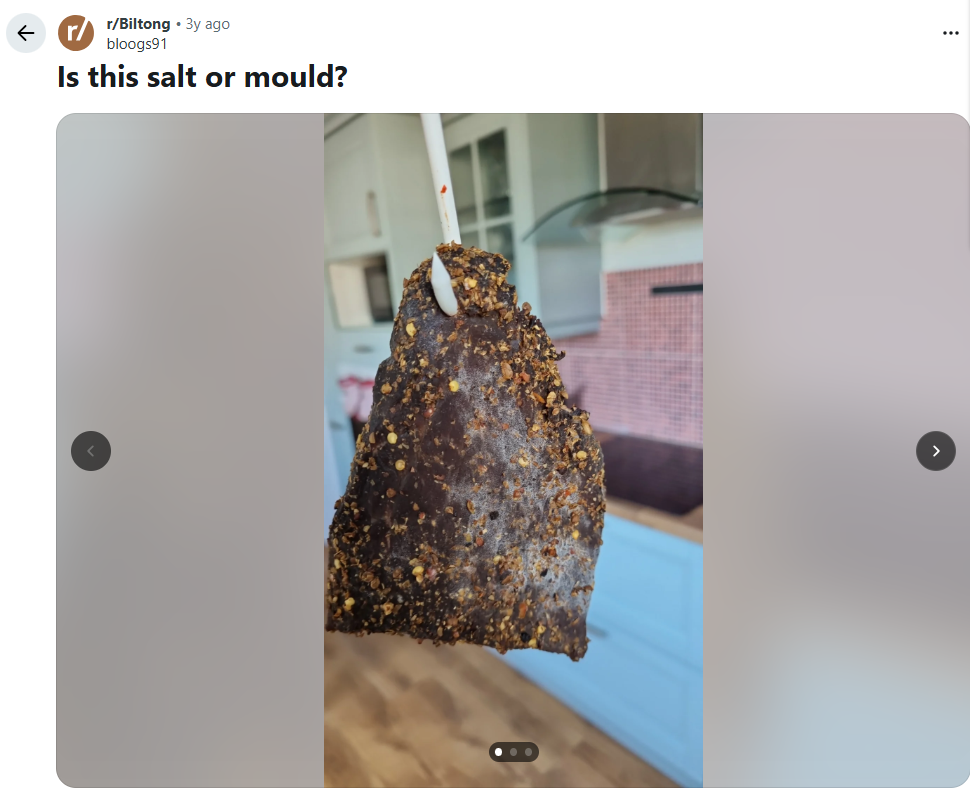
A small white powdery patch on the surface is sometimes salt or fat bloom rather than mould. If it wipes away cleanly with a 70/30 vinegar-water mix and there’s no smell, you can dry the piece thoroughly and continue. Keep a close eye on it from that point.
“Is this salt or mould?” is probably the most asked question from new makers, and it’s usually this white powdery kind they’re looking at.
Fuzzy or Coloured Mould
Green, black, or blue fuzzy growth is a different matter entirely. That biltong goes in the bin, full stop. The same applies to any sliced pieces with visible mould, where the surface area makes the contamination harder to contain. There’s no salvaging it safely.
The preventive fix is straightforward: keep humidity below 60%, ensure air moves freely around every piece, and don’t leave biltong hanging in a warm or damp environment longer than needed. If your drying space tends to get humid, wipe any affected spots with vinegar immediately and address the airflow before the next batch.
Biltong Too Wet Inside (Case Hardening)
Case hardening is one of the more frustrating problems because the outside of the biltong looks and feels done while the inside is still soft and wet. What’s happening is that the exterior dried too quickly, forming a hard shell that prevents moisture from escaping the core.
It’s usually caused by cutting meat too thick, too much airflow hitting the surface directly, or a combination of both. The outside gets blasted dry while the inside has no way to catch up.
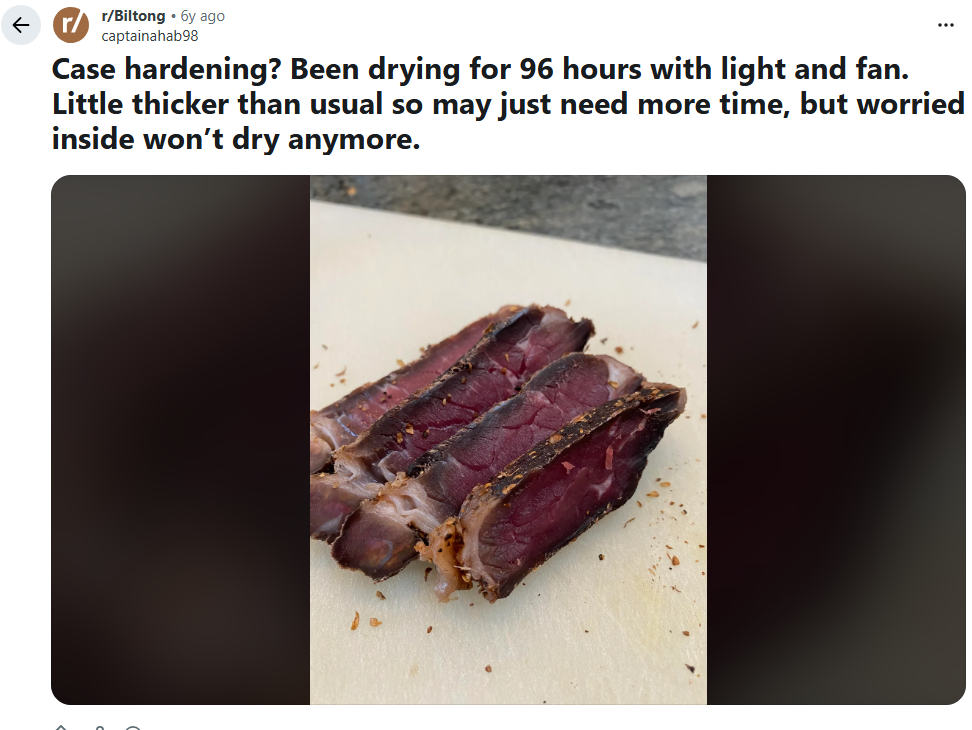
Fixing a Case-Hardened Batch
If your current batch has already hardened on the outside, there are a few approaches worth trying. Dipping the pieces in diluted vinegar and vacuum sealing them for a day or two can let moisture redistribute through the meat before you return them to the dryer. Cutting into cubes and hanging them again for a short additional drying period also works for some batches.
Preventing It Next Time
Cut your meat to around 10 to 15mm thick and aim for steady, gentle airflow rather than a direct blast. The goal is a consistent environment that dries the whole piece evenly, not just the surface. If your setup allows it, moderating fan speed makes a noticeable difference here.
Biltong Too Dry or Too Hard to Eat
Over-drying is one of the most common complaints from first-time makers. Kalahari Khabu’s own FAQ lists it as a frequent issue: meat cut too thin, left in the dryer too long, or exposed to airflow that’s stronger than necessary.
The problem with relying on time alone is that conditions vary. A batch that takes three days in a cold, dry Wellington winter might be done in two days during an Auckland summer. Checking texture and tracking weight loss gives you a more reliable signal than days on the calendar.
Once biltong reaches the moisture level you’re after, it comes out of the dryer and goes straight into storage. Leaving it hanging past that point just keeps drying it.
If the Batch Is Already Too Hard
Slice thinly across the grain. It doesn’t fix the texture entirely but it makes overly dry biltong considerably more edible. For future batches, cut slightly thicker pieces, reduce drying time, and check progress earlier than you think you need to.
Bad Airflow in Your Drying Box
Airflow is the variable most people underestimate when they set up a biltong box for the first time. Too little and moisture sits in the box, creating the conditions mould needs. Too much and you get case hardening. The target is steady, gentle circulation that removes moist air without aggressively blasting the surface of the meat.
A few things worth checking if your results are inconsistent:
- Fans should draw air out of the box, not push it in. Extracting humid air is the job, not forcing dry air onto the meat.
- Pieces should hang with enough space between them that air can reach every surface. Crowded pieces that touch each other dry unevenly and create pockets where mould takes hold.
- Vents and screens matter more than fan power. The design of airflow through the box determines how consistently everything dries.
If you’re using a basic DIY box and seeing persistent mould or uneven results, airflow is almost always the first thing to look at. Purpose-built dryers like the KK12 are designed around this specific problem, with airflow engineered for NZ home conditions.
Cooking the Meat Instead of Air Drying
Biltong’s meant to be air dried, not cooked. The whole point is that cool, moving air pulls moisture out slowly while the meat stays raw through the middle.
The most common way people accidentally cook it is by putting a light bulb inside the box for warmth. A bulb seems like a sensible way to fight humidity, and a low one can help, but it’s easy to overdo. Too much heat from a bulb sitting too close starts to gently cook the outside instead of drying it.
You’ll spot it a few ways:
- A cooked, greyish band under the surface
- Fat that’s started to render and go greasy
- A smell that’s more roast than cured
- An outside that firms up while the centre stays raw and wet
It often gets mistaken for case hardening, but here the cause is heat, not just airflow.
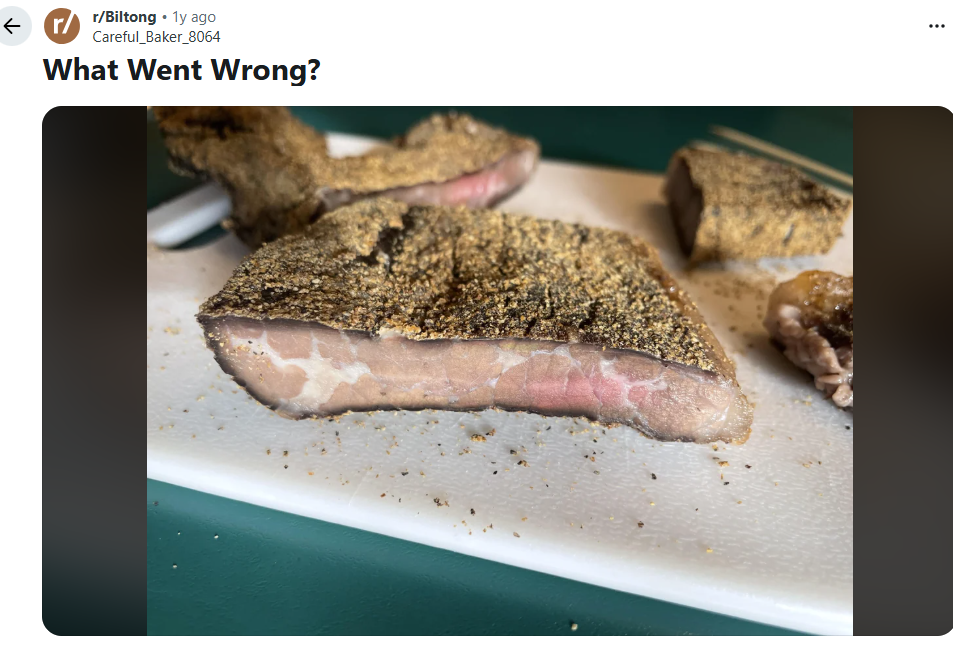
This one comes up a lot in the r/Biltong community, where people post batches that turned out cooked rather than dried and trace it back to a bulb running too hot in the box.
The fix is to let airflow do the work and keep heat to a minimum. If you’re in a humid spot and want a little warmth, use a low-wattage bulb, keep it well away from the meat, and always pair it with extraction airflow so you’re moving air rather than baking the box.
The more reliable answer is a setup that controls temperature and airflow for you, which is exactly what a purpose-built dryer like the KK12 is built to do.
Wrong Vinegar or Salt Ratios
Flavour problems are usually fixable, but they’re worth understanding properly because salt and vinegar aren’t just about taste. They’re part of what makes biltong safe to eat. Reducing them too aggressively without understanding the preservation side of things creates a food safety issue, not just a flavour one.
That said, most home makers err toward too much salt rather than too little.
Too Salty
Fine salt is the most common culprit. It penetrates meat faster and more deeply than coarse salt, which means you end up with a saltier result even when using the same weight. Switching to coarse salt and reducing salting time slightly often sorts this out without needing to change quantities much.
If the batch is already too salty, balancing with more coriander or pepper in future recipes can help, rather than cutting salt further than is safe.
Too Much Vinegar (Acid Cooking)
Salt usually gets the blame for ratio problems, but vinegar causes its own. Vinegar helps cure the meat and keeps it safe while it dries, so you can’t just cut it out.
The issue is concentration and contact time. If your vinegar’s too strong, or you leave the meat sitting in it too long before it goes on to dry, the acid starts to “acid cook” the outside. You’ll notice it as a texture change rather than a flavour one: the surface turns tough or rubbery, sometimes a little grey, and the tang gets sharper than you wanted.
It’s a common one, and it’s a recurring theme in the r/Biltong community whenever people troubleshoot texture that’s gone odd on the outside.
The fix is to treat vinegar as a quick step, not a marinade. Use a sensible dilution, give the meat a brief dip or a light coat rather than a long soak, and get it hanging soon after. If a batch has already gone tough and sharp on the surface, slicing thinly across the grain makes it easier to eat while you dial in the next one.
Tracking Your Adjustments
The most useful habit is recording exact quantities, ratios, and timing for every batch. Kalahari’s troubleshooting guide recommends this specifically: adjust one variable at a time using small test batches so you can identify what’s actually making the difference, rather than changing three things at once and not knowing which one worked.
Humidity in NZ: Why Standard Biltong Advice Doesn’t Always Apply
Most biltong recipes and guides are written with South African conditions in mind: hot, dry air where biltong dries predictably and mould is less of a constant concern. New Zealand’s climate is different, and copying those methods without adjustment leads to the kind of problems described above.
Humidity in NZ varies significantly by region and season. Auckland in summer is a genuinely challenging environment for drying biltong. Canterbury in winter is much more forgiving. Neither is the same as Johannesburg in September.
The practical implications are worth taking seriously:
- High humidity slows drying and raises mould risk, which means you may need more active airflow management than a South African recipe assumes.
- Drying in damp garages, bathrooms, or poorly ventilated spaces compounds the problem significantly.
- A lightbulb or gentle heat source inside the drying box can help reduce ambient moisture in humid conditions, though this needs to be paired with controlled airflow rather than just added heat.
The most reliable solution for NZ conditions is a purpose-built dryer where airflow, ventilation, and temperature are controlled rather than left to whatever the room happens to be doing that day. It removes the guesswork that causes most of the problems on this list.
Most of the problems on this list come back to the same root cause: an inconsistent drying environment. A box that doesn’t manage airflow and humidity properly will produce unpredictable results regardless of how good your recipe is.
If you want to see what a dryer built specifically for NZ home conditions looks like, take a look at the KK12 Biltong Dryer and our Beginner’s Guide to Making Biltong at Home.