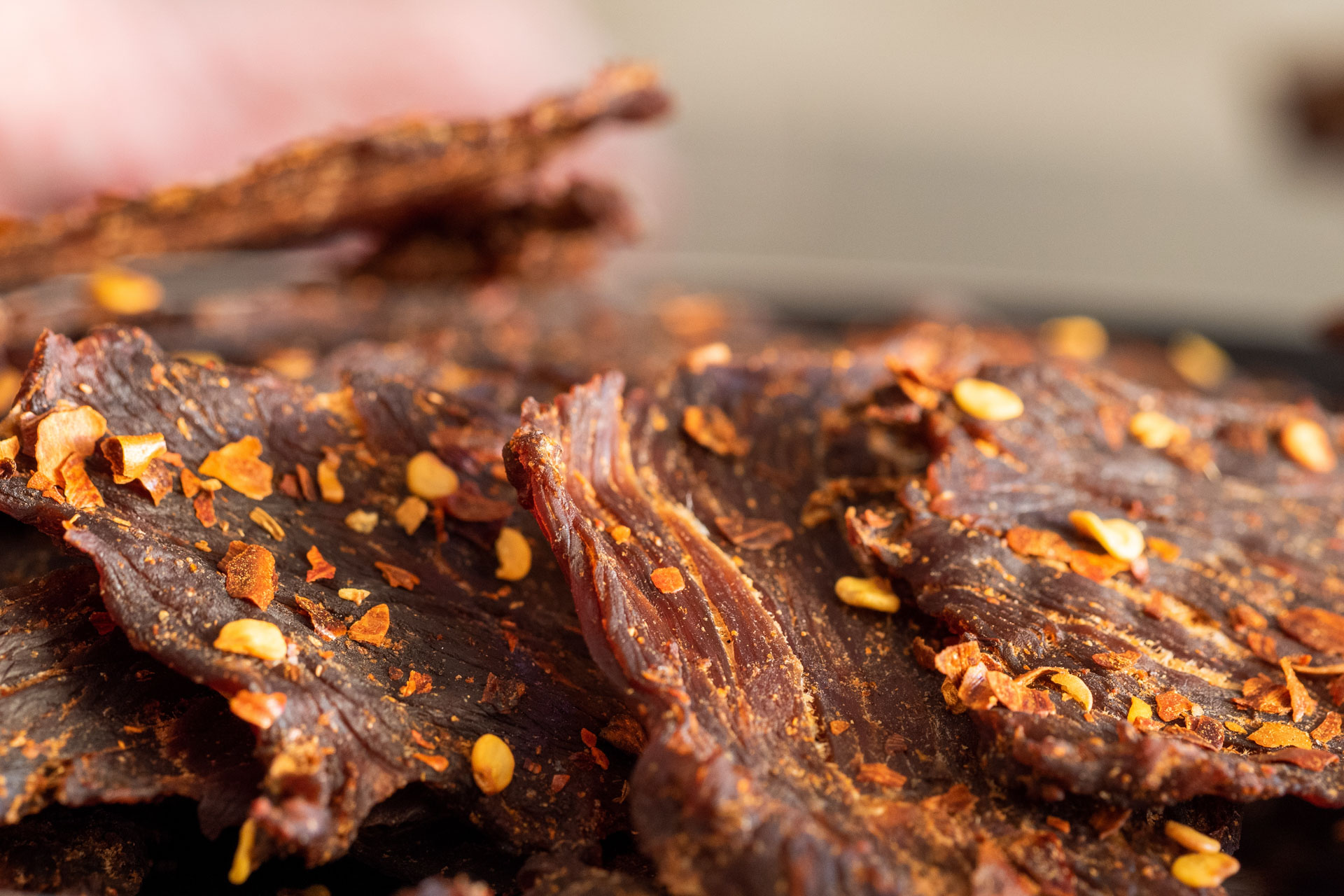
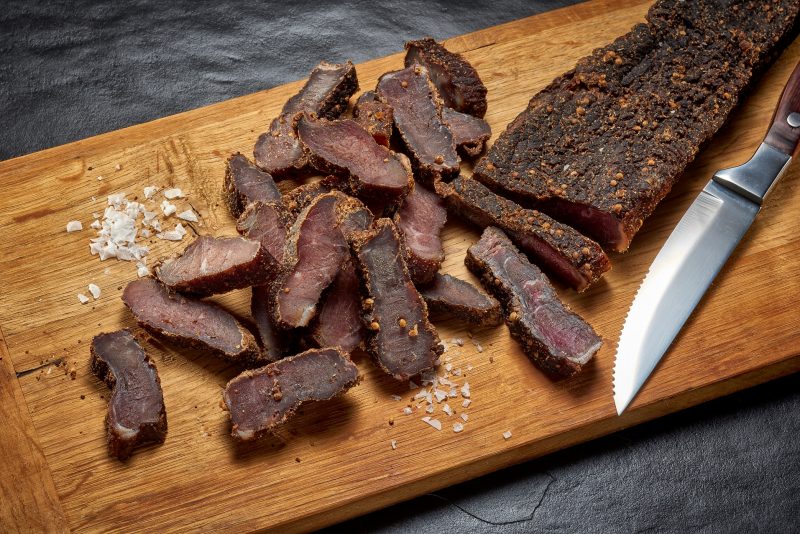
Biltong is cured, not cooked, which means most people assume it basically looks after itself. That assumption is where things start going wrong. Humidity, air exposure, and temperature shifts can still cause mould, texture changes, and flavour loss, often faster than you’d expect, especially in a New Zealand summer. This guide covers every storage method worth knowing, how long each one actually lasts, and how to tell when your biltong has gone past saving.
Why Biltong Storage Actually Matters
Curing preserves biltong, but it doesn’t make it indestructible. Once the drying process is done, moisture becomes the main enemy. Too much of it, whether from humid air, condensation, or airtight plastic trapping sweat, creates exactly the conditions mould needs to take hold.
Good storage isn’t complicated. It mostly comes down to controlling moisture and airflow. Get those two things right and your biltong stays safe, tastes the way it should, and lasts considerably longer.
Paper Bag vs Vacuum Sealing. Which One Should You Use?
The answer depends on how quickly you plan to eat it.
Paper Bags (Short-Term Storage)
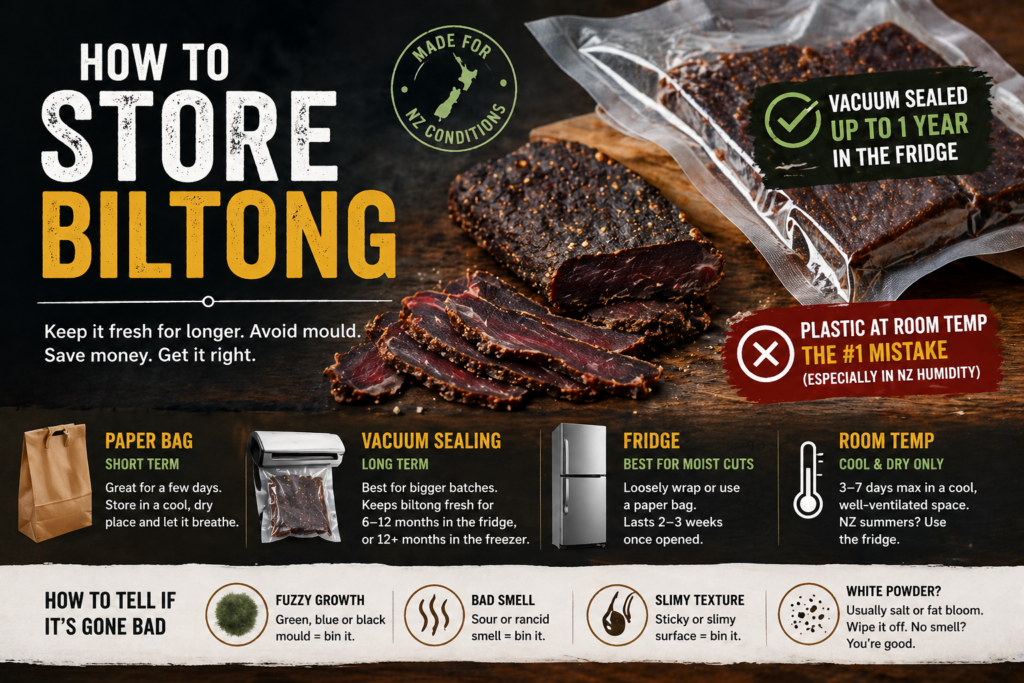
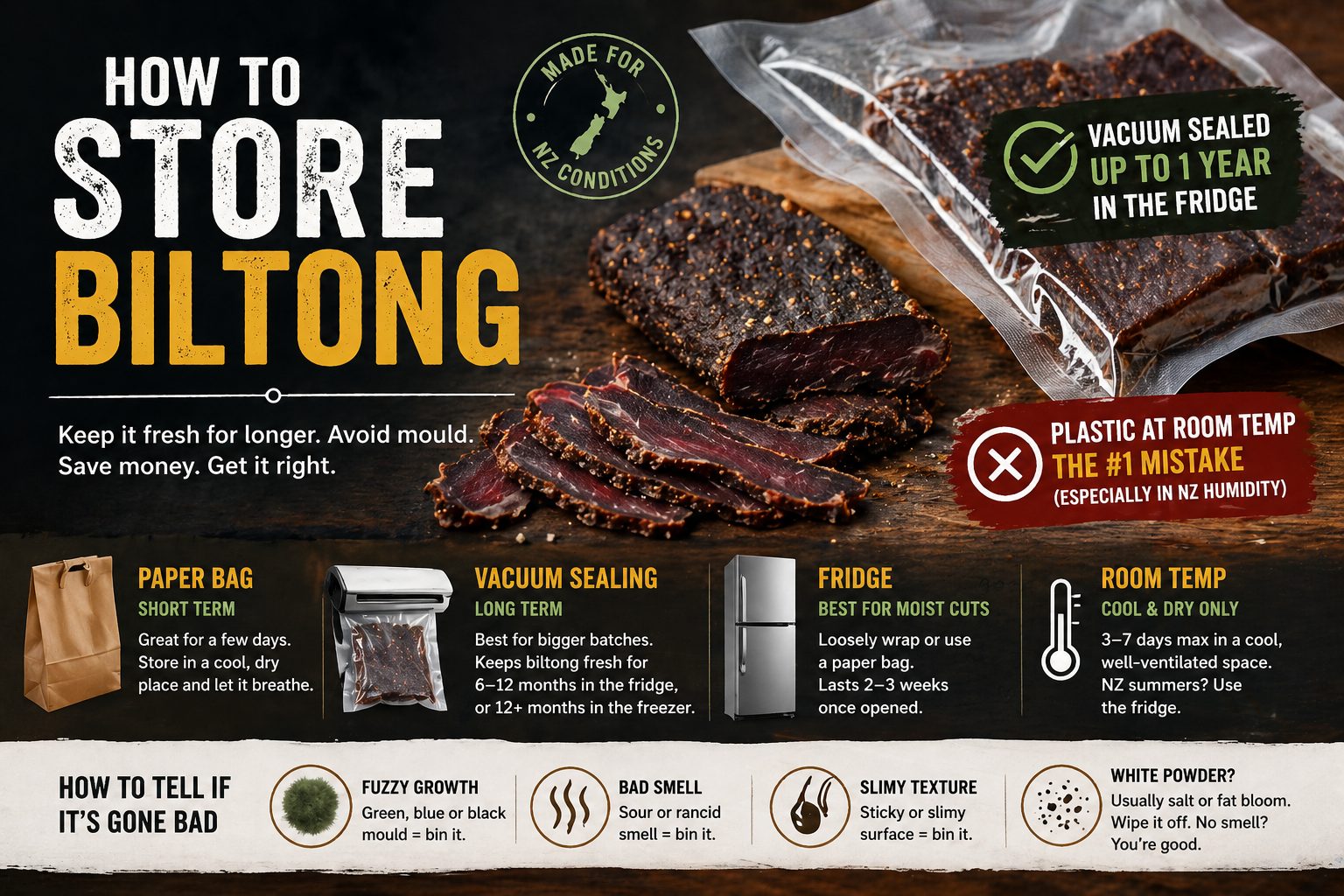
A clean, dry brown paper bag is the traditional method, and it works well for biltong you’ll finish within a few days. Put your strips inside a plastic bag, fold the top over, and keep it somewhere cool and dry, like a pantry or cupboard away from the stove to extend its shelf life.
The reason paper works is simple: biltong needs to breathe. Sealing fresh or slightly moist biltong in airtight plastic traps moisture against the meat, which leads to sweating and, before long, mould. Paper lets air circulate just enough to keep things dry without drying the biltong out completely.
This method suits a small batch you bought fresh and plan to work through quickly. It’s not a long-term solution for keeping your biltong fresh.
Vacuum Sealing (Long-Term Storage)
If you’re storing a larger batch, vacuum sealing is the most reliable method available. Removing the air significantly slows mould and microbial growth, giving you a much longer window before quality starts to drop.
Properly vacuum-sealed biltong can last six months to a year in the fridge at around 2 to 4 degrees Celsius. In the freezer, it holds up well for a year or more when defrosted correctly. If you make your own biltong at home, this is worth building into your routine from the start: seal in portions so you’re only opening what you need.
Fridge or Room Temperature. What’s Right for NZ Conditions?
This is where New Zealand’s climate makes a genuine difference to the advice.
Dry biltong stored in a cool, well-ventilated space at room temperature can stay good for roughly four to seven days. That works fine in a cold Canterbury winter. It’s a different story in Auckland in February.
In warm or humid conditions, moist biltong should go straight into the fridge. The approach that works best is wrapping it loosely in a paper towel, or placing it in a paper bag inside a container, so it stays breathable while the fridge controls the surrounding temperature. Sliced biltong in particular should be refrigerated once opened and eaten within five to ten days, depending on how moist it is.
The core rule: if you’re in any doubt about your environment, refrigerate it. The fridge won’t ruin your biltong. Mould will.
How Long Does Biltong Last? (By Storage Method)
Here’s a clear breakdown so you know what to expect:
- Paper bag, room temperature: 3 to 7 days in a cool, dry environment
- Refrigerated (loosely wrapped): roughly 2 to 3 weeks for opened biltong, with moist cuts on the shorter end
- Vacuum-sealed in the fridge: 6 to 12 months, depending on how well it was sealed and the moisture content
- Frozen, vacuum-sealed: up to a year or more when defrosted carefully
These aren’t hard expiry dates. A lot depends on how dry the biltong was to begin with, how carefully it’s stored, and your local conditions. When in doubt, check before you eat.
How To Tell If Your Biltong Has Gone Bad
The signs are usually obvious once you know what to look for.
Fuzzy growth is the clearest indicator of mouldy biltong. Green, blue, or black spots mean mould has taken hold and the biltong needs to go in the bin. A sour or rancid smell is equally definitive. So is a slimy surface texture. None of these are worth eating around or cutting off.
The one exception worth knowing: a light white powdery coating on the surface is sometimes harmless salt or fat bloom rather than mould. If it wipes away cleanly and there’s no smell, it’s usually fine. If you’re unsure, or the white patches are spreading, don’t risk it. Biltong is not expensive enough to gamble with your health, so make sure to consume it before it goes bad.
Whole Biltong vs Sliced. Does It Make A Difference?
It does, and the reason is straightforward. Whole, unsliced pieces have less surface area exposed to air, which slows deterioration. Slice only what you’re about to eat and keep the rest whole for as long as possible.
Sliced biltong is more vulnerable to drying out and spoilage. Once sliced, refrigerate it and aim to finish it within a few days to a week. Whole sticks can be kept in a cool, dry, ventilated space, or hung if you have the setup for it, and will stay in good condition for longer without refrigeration.
If you’re making your own at home, this is a habit worth building: pull a piece, slice what you need, put the rest away properly.
Storing Biltong When You’re Travelling
Biltong is a solid travel snack, but it does need a bit of attention on the road.
For short trips in mild weather, a paper bag or breathable container kept out of direct sunlight and away from heat is enough. Eat it within a few days and you’ll be fine.
In hot or humid conditions, use a cooler bag if you can, especially for moist cuts. Heat accelerates everything you’re trying to avoid.
For longer trips or if you’re taking a bulk supply, portion it into vacuum-sealed packs before you leave and open one at a time. The rest stay protected until you need them. It’s a small amount of preparation that makes a real difference over several days of travel.
A Note on Homemade Biltong Storage
If you’re making biltong at home rather than buying it, storage starts with getting the drying process right. Biltong that hasn’t dried evenly or thoroughly is harder to store safely, because pockets of moisture can sit inside the meat even when the outside feels done.
A good biltong dryer makes a measurable difference here. Kalahari Khabu’s dryers are built specifically for New Zealand home conditions, which means consistent airflow and temperature control throughout the drying process. Biltong that dries correctly from the start is easier to store and lasts longer once it’s done. If you’re curious about making your own, our beginner’s guide to making biltong at home in New Zealand is a practical place to start.
Proper storage starts with properly dried biltong. If your homemade batches aren’t coming out consistently, the drying setup is usually where the problem starts. Take a look at our KK12 biltong dryer and see what a purpose-built dryer designed for NZ conditions actually looks like.