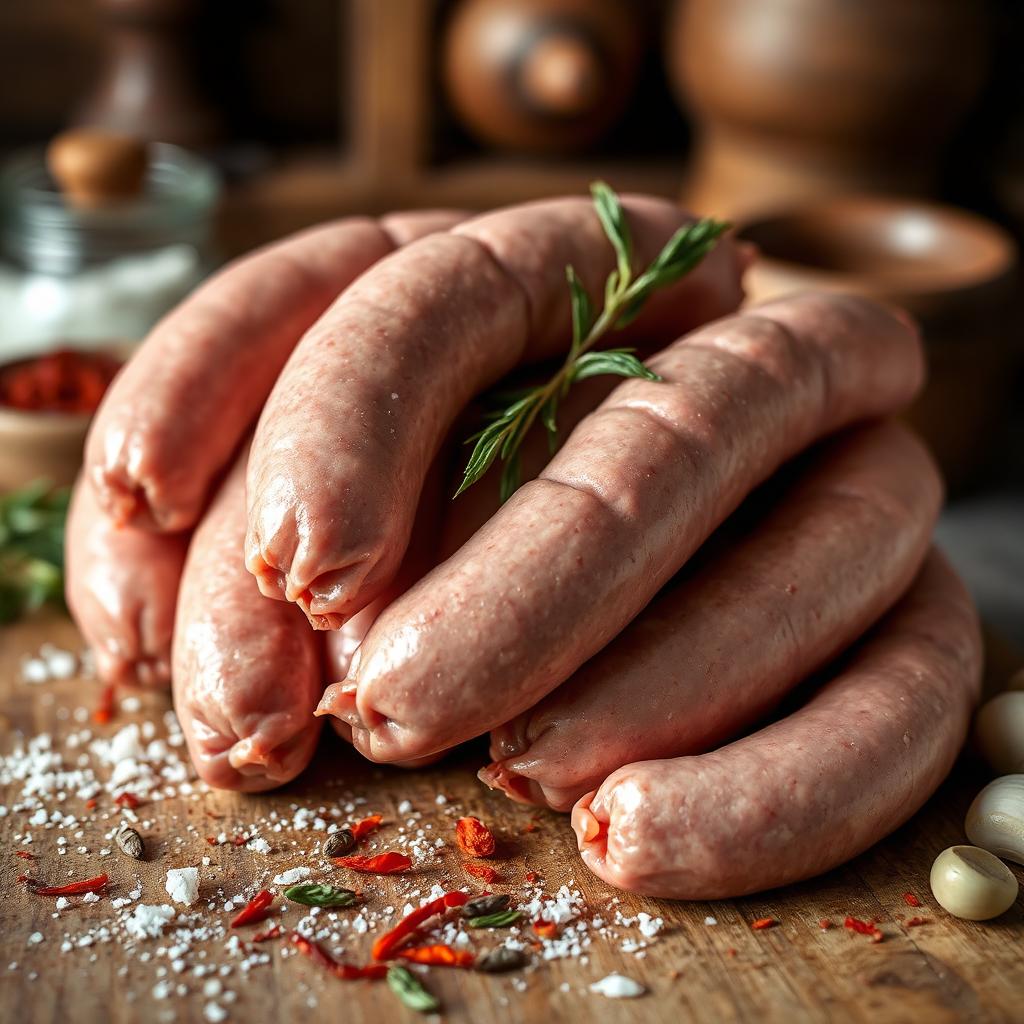
Italian Sausage

Yield: ~10 lbs sausage mix (makes ~40 — 6″ links in 32–35 mm collagen or natural hog casings) Profile: Classic mildly spicy Italian, balanced fennel & garlic, adjustable heat. Developed for use with Natural Casings and Kalahari Khabu Sausage Making Products

Ingredients (by weight)

  • 6 lb pork shoulder, partially frozen (70% lean / 30% fat) — cut into 1″ cubes
  • 2 lb pork fatback or pork belly, partially frozen — cut into 1″ cubes
  • 130 g kosher salt (2% of total meat weight)
  • 32 g dextrose or granulated sugar (0.5%)
  • 28 g ground fennel seed (0.45%)
  • 20 g cracked black pepper (0.33%)
  • 15 g smoked paprika (0.25%) — adds color/smoke flavor
  • 15 g sweet paprika (0.25%)
  • 12 g crushed red pepper flakes (adjust 0–25 g for heat)
  • 20 g garlic, minced or crushed (fresh) or 12 g garlic powder
  • 10 g ground white pepper
  • 150 ml cold ice water or crushed ice (helps emulsion)
  • 30 ml red wine (optional, for depth)
  • Natural hog casings or 32–35 mm collagen casings, soaked & rinsed

Notes on ratios: Salt is ~2% of total meat weight (recommended). Adjust fennel, pepper, and heat to taste. For leaner product, increase meat and reduce fat but keep fat at least 25–30% for juiciness.

Equipment & settings

  • Kalahari Khabu sausage stuffer  with 20–25 mm stuffing tube for sausages tied as 6″ links on 32–35 mm casings.
  • Grinder plate: 8–10 mm for first grind, then 4–6 mm for second grind (double grind recommended).
  • Mixer or bowl with spatula for mixing, or stand mixer with paddle on low.
  • Thermometer to keep meat < 50°F (10°C) during processing.

Method

  1. Chill everything: meat, fat, bowls, grinder parts, knife, and mixer. Keep temps cold to ensure good texture.
  2. Prepare casings: Soak natural casings in warm water 30–60 min; rinse inside & out. Keep moist.
  3. Grind: Pass meat and fat through 8–10 mm plate, then through 4–6 mm plate for finer texture. Keep mixture cold.
  4. Mix dry: Combine salt, sugar, fennel, black pepper, white pepper, paprika(s), red pepper flakes, and garlic.
  5. Blend: In a chilled bowl or mixer on low, combine ground meat with spice mix. Add cold water and red wine gradually. Mix until homogenous and slightly sticky (protein development) — do not overheat.
  6. Test seasoning: Fry a 1″ patty in a skillet, cool, taste, and adjust seasoning if needed.
  7. Stuff: Load stuffer, slide casing onto stuffing tube leaving a tail, and fill casings with even pressure. Twist into ~6″ links or preferred size. Prick any large air pockets with a sterile needle and re-twist.
  8. Rest: Refrigerate overnight (12–24 hrs) to let flavors maturate and bind.
  9. Cook/Smoke options:
    • Fresh sausage: Pan-fry, grill, or bake to internal temp 160°F (71°C).
    • Cold-smoked then cooked: Dry surface 1–2 hrs, cold-smoke to taste (1–3 hrs), then fully cook to 160°F. For hot-smoking, smoke at 180–200°F until internal temp 160°F, then rest.
  10. Store: Refrigerate up to 3–4 days or freeze portions. Properly smoked links will keep longer when vacuum packed

related blogs

Blog

Biltong Maker NZ: From Tradition To Innovation

At Kalahari Khabu, we don’t just make biltong; we live, breathe, eat, and sleep it. Our mission is to bring the world’s best biltong to ...
Read More →
Blog

Biltong Vs. Jerky: Understanding The Differences

Discover the key biltong vs. jerky differences, from their origins and preparation methods to taste and texture. Learn why these dried meats are uniquely delicious.
Read More →
Blog

The Ultimate Guide To Making Traditional South African Biltong At Home

At its heart, the art of making biltong connects us to centuries of tradition, heritage, and mouthwatering flavour. This beloved South African delicacy has travelled ...
Read More →
Shopping Cart
Scroll to Top