The Best Way To Ruin A Good Sausage
You can follow a traditional recipe.
You can measure your ingredients carefully.
And still end up with a disappointing sausage.
Dry and crumbly texture.
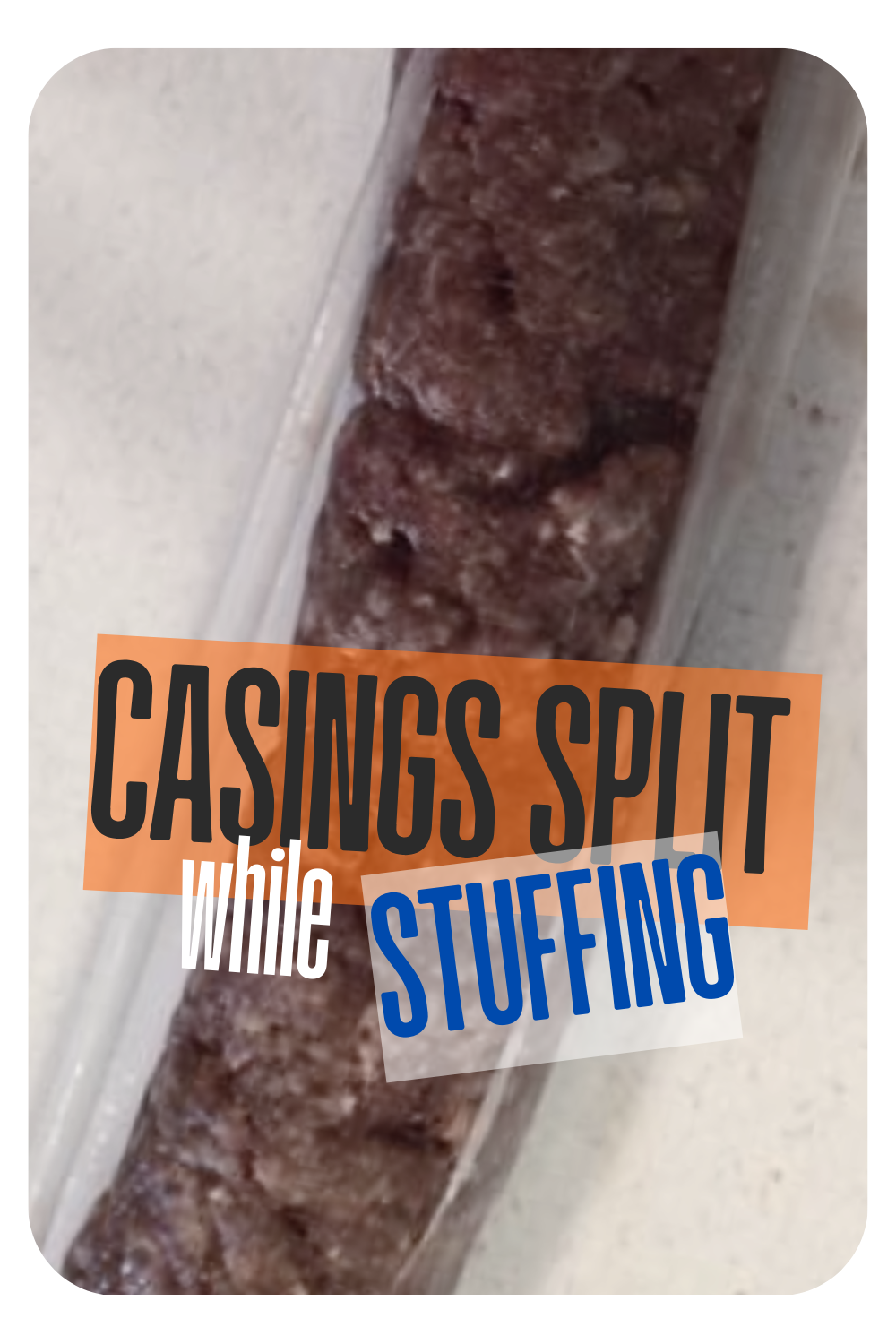
Casings burst and drain all the flavour.
Polite comments from friends and family.
You just wanted a juicy, high quality sausage.
Now you have to start the whole process again.
Here’s the truth:
The fastest way to ruin good sausage is using the wrong equipment.
Most people who are thinking about making home made sausages start with a stand mixer like a Kitchenaid
It Starts At The Grinder
A Kitchenaid grinder can handle small batches of 1-2kg but it’s slow and overheats. Why does that matter?
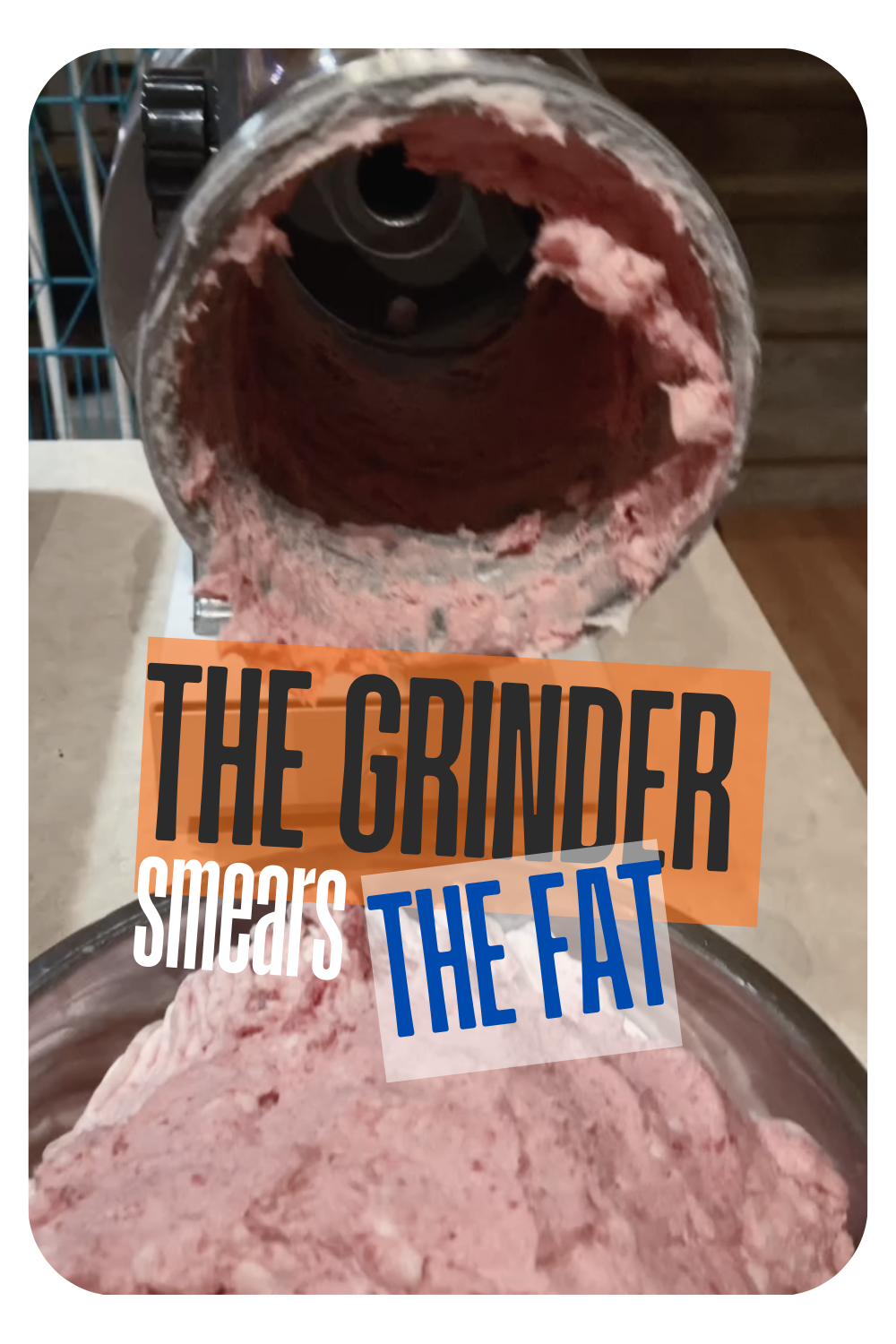
When fat starts to warm it melts. Which is called ‘fat smearing’.
This matters because it destroys the texture of the sausage:
Poor Texture: The finished sausage will be greasy, mushy, and often dry or crumbly when cooked.
“Fat-Out”: Because the fat has already melted, it will quickly melt again during cooking, leaking out of the sausage, leaving a “sad, greasy pan”.
Casing Separation: A thin layer of smeared fat can form between the meat and the casing, causing them to separate.
Loss of “Snap”: The sausage loses its signature snap because the emulsion has failed.
And once that structure is compromised, you can’t restore it later.
No amount of spice or added stabiliser ingredients will fix it.
So how does a powerful, dedicated grinder solve this issue?
Pro tip: maintaining an extremely cold temperature (around 0°C (32°F) to 2°C (36°F)) for both the meat and the grinder components (blade, plate, auger) is critical for high-quality sausage.
- It Cuts Instead of Crushes
A proper meat grinder doesn’t mash meat through a plate. It cuts it cleanly.
With a powerful motor and sharp, precision-aligned blade, the grinder acts like a rotating pair of scissors. Lean and fat are sliced into clean, distinct particles.
Low-powered attachments struggle under load. As they slow down, friction builds. And friction generates heat. That heat softens the fat before it ever leaves the plate.
The difference between cutting and crushing is the difference between juicy sausage and dry crumble.
-
It Reduces Friction and Heat
The longer meat sits inside a grinder head, the warmer it gets.
Stand mixer attachments and light-duty units take more time to push meat through. That delay increases friction. Friction increases temperature. And rising temperature softens fat.
A dedicated, high-torque grinder moves meat through quickly and efficiently. Less time inside the head means less heat exposure. The fat stays firm. The texture stays intact.
- It Keeps Everything Colder
Dedicated grinders are built from heavier metal components that hold temperature better than plastic or lightweight systems. When pre-chilled, they stay cold longer.
Cold metal + cold meat = clean fat particles.
Warm equipment + struggling motor = emulsified fat and sticky paste.
-
It Reduces Back Pressure
When a grinder lacks power, meat backs up behind the plate. That pressure causes smearing and heat buildup before the meat even exits.
A properly sized grinder clears the plate efficiently. No clogging. No pressure buildup. Just steady, clean throughput.
Then Mixing Makes It Worse
Most people think mixing is the easy part.
Grind the meat.
Add the seasoning.
Stir it together.
But this is the stage where texture is either built… or destroyed.
Great sausage relies on proper protein extraction. When meat is mixed correctly, the salt activates the proteins in the lean meat, allowing them to bind with the fat. This creates that firm, juicy structure and the clean “snap” when you bite into it.
Under-mix it? The sausage crumbles.
Overwork it? It turns dense and rubbery.
And that’s exactly what happens with hand mixing or stand mixer attachments.
The Problem With Mixing by Hand
Hand mixing feels simple but it’s not as easy as it looks to get it right.
You’re relying on feel that comes from experience. The mix warms quickly from body heat. Pressure isn’t evenly distributed. Some areas are fully incorporated while others are underdeveloped.
You either stop too soon and get poor bind…
Or mix too long trying to fix it.
And once the fat starts warming, you’re back to smearing issues again.
Why Stand Mixers Make It Worse
A KitchenAid wasn’t designed to develop sausage bind.
It kneads dough.
It whips cream.
It spins in one central motion.
When you use a dough hook or paddle on meat:
- It over-compresses the mix
- It generates friction heat
- It overworks protein strands
- It destroys particle definition
Instead of cleanly folding and distributing, it kneads the meat into a dense paste.
Sausage isn’t bread.
You don’t want elasticity from gluten.
You want structure from controlled protein extraction.
What a Dedicated Meat Mixer Does Differently
The KK Meat Mixer uses a paddle system specifically designed for meat.
Instead of kneading or whipping, the paddles lift and fold the mix gently and evenly. This ensures:
- Seasoning is evenly distributed
- Fat stays distinct
- Lean proteins develop proper bind
- The mix stays cold
The Result
Even seasoning distribution.
Clean fat particles suspended throughout the lean.
Firm bind without overworking.
Juicy sausage that holds together without becoming dense.
Stuffing with a stand mixer ruins everything (and is a painful experience)
After grinding and mixing properly, most people undo their hard work at the final step.
They leave the grinder assembled, swap the plate for a stuffing tube, and push the meat back through.
It seems convenient.
But mechanically, it’s the wrong tool.
Trying to stuff sausage through a grinder attachment introduces heat and pressure in the wrong places. It uses a ‘drilling motion’ which can’t build up pressure to stuff, instead it just smears the fat and ruins the texture. You want a piston mechanic to stuff.
It’s also time consuming and painful. If you’ve done it before then you know what we mean.
When you stuff through a grinder:
- The meat is forced back through the screw
- The mixture is re-compressed
- Friction increases
- Fat begins to smear again
- Pressure becomes unpredictable
That’s when casings split.
That’s when texture tightens.
That’s when air pockets form.
You just rebuilt heat and pressure into a mixture that was finally balanced.
Stuffing should be gentle.
Grinding is forceful.
Stuffing is controlled.
Those are not the same motions.
Why a Dedicated Sausage Press Is Different
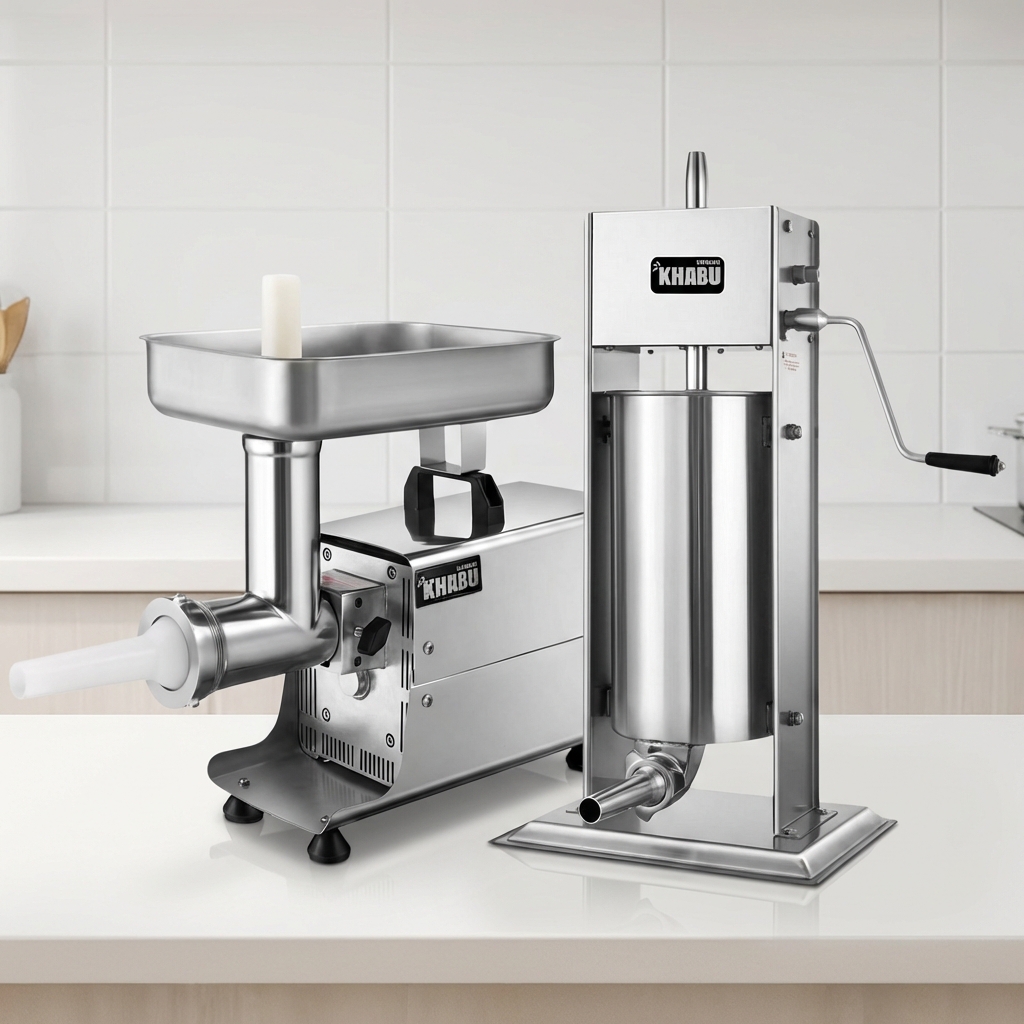
The KK Sausage Press is built specifically for one job: controlled, even filling.
Instead of a rotating screw crushing the mixture forward, a vertical press applies smooth, steady downward pressure. The meat moves forward as a single mass.
That changes everything.
1. No Re-Smearing the Fat
Because there’s no auger spinning inside a head, the fat particles you carefully preserved during grinding stay intact. The press protects the structure you worked to build.
You’re not re-processing the mixture.
You’re simply guiding it into the casing.
2. Even Pressure, Fewer Blowouts
Grinder attachments create inconsistent pressure spikes. When pressure jumps, casings split.
A vertical sausage press gives you smooth, controlled force. You control the fill rate. You decide how tight the casing should be.
- No sudden bursts.
- No unexpected splits.
Just clean, consistent sausages.
3. Less Air = Better Texture
When stuffing through a grinder, air gets pulled into the mixture. That leads to air pockets, weak spots and inconsistent cooking.
A proper press minimizes air introduction. The mixture flows evenly, filling the casing without trapping bubbles that cause problems later.
4. It’s Actually Easier
Let’s be honest.
Stuffing through attachments is frustrating.
You fight the machine.
You wrestle the casing.
You constantly adjust.
A vertical press is simple.
Load. Press. Control.
What used to feel like a battle becomes a smooth, repeatable process.
The Final Piece of the System
A grinder cuts clean.
A mixer builds bind.
A sausage press protects the texture and fills evenly.
Each tool has one job.
And when each job is done properly, the result isn’t just “good enough.”
It’s sausage with:
- Clean particle definition
- Proper snap
- Even density
- No blowouts
- No air pockets
That’s the difference between making sausage… and making it properly.
Here’s the simple contrast:
| All-in-one attachment | Dedicated grinder + mixer + press |
| Designed for versatility Built for small kitchen batches Compromises control between stages Cheap in the short term Expensive in the long run |
Designed for separation of force Built for volume consistency Maintains temperature and structure More expensive in the short term Cheap in the long run |
Respect The Stages
A grinder should grind.
A mixer should mix.
A stuffer should stuff.
If you’ve experienced what purpose-built equipment can do for your biltong cravings, you already understand this principle.
If you’d like to see what proper setup looks like, you can explore the full sausage-making range here
Because once you understand why things go wrong, it’s hard to go back to using a stand mixer.