
The same kilo of beef. Three times the margin.
Whatever you sell over the counter now, and without putting anyone on a new shift.
Yes, that includes the first batch. My team does it on your floor with your staff, in one working day.
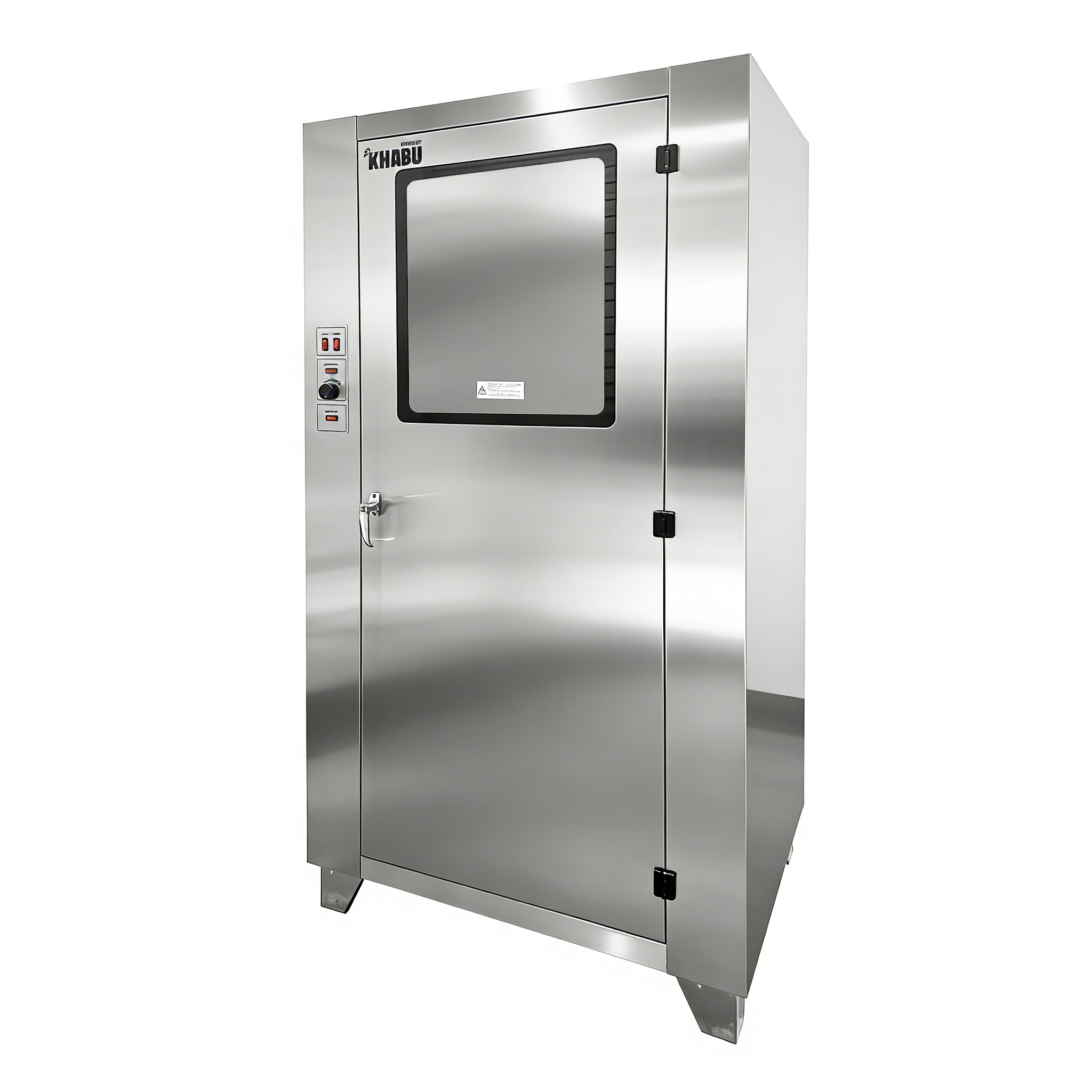
Dry it instead of selling it fresh and it comes back at roughly three times what your counter makes on it now. Same animal, same chiller, same staff. A KK40 hangs 40 kg a load and costs $3,495. Five loads and you have it back.
Free call, nothing to buy at the end of it. Four questions, then I ring you within 24 hours.
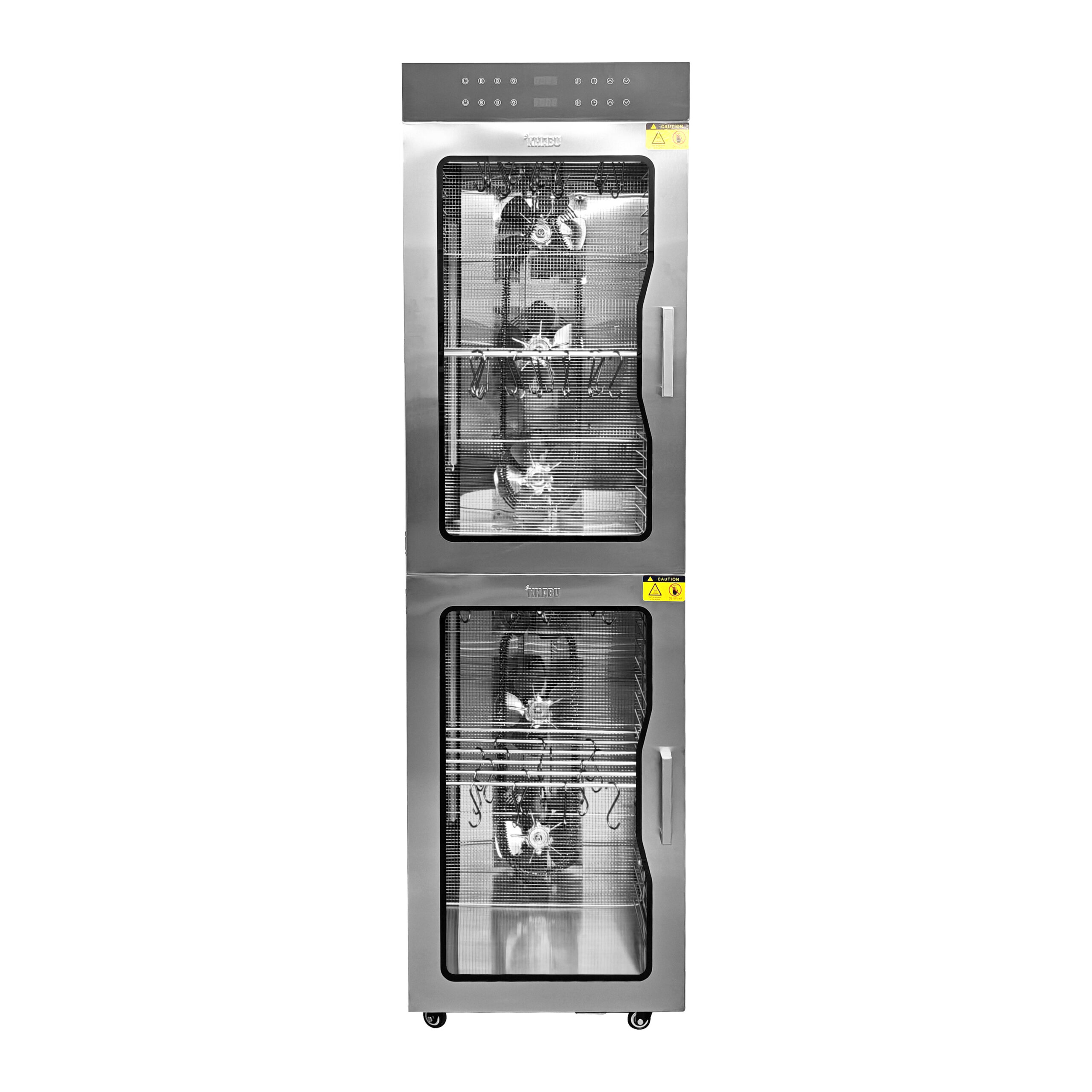 KK40 · 40 kg a load · $3,495
- Wet meat per load40 kg
- Finished per load20 kg
- Finished per month224 kg
- Hands on, per batch1 to 2 hrs
- Gross profit / batch$800
You are selling beef against a supermarket that buys cheaper.
You already know that. It gets a bit harder every year.
The usual answer is to work the counter harder. More hours, same margin.
Dry that same kilo into biltong and it sells at a margin fresh cuts never reach. You already own everything it takes. The meat, the licence, the chiller, the people walking past your window.
The product is the only bit missing.
Almost nothing.
Same suppliers, same staff. You lose a bit of wall and that is about it.
Somebody hangs a load on Monday. Later that week a new product comes off your counter at a margin your fresh cuts cannot reach.
That is the whole change.
Roughly three times, out of the same chiller.
Stats NZ puts the median gross margin for meat retailing at about a third. That figure comes from Inland Revenue tax records, so it is probably close to yours.
Now take the same kilo and dry it. Beef loses about half its weight, so 2 kg of beef becomes 1 kg of biltong. That finished kilo brings in about $40, which works out at roughly $20 back on the raw kilo you started with.
A KK40 takes 40 kg a load. Two slab batches and one batch of smalls a week comes to about 224 kg of finished biltong a month, out of a space about the size of a small chiller.
Estimates. Profit is worked out at $40 a kilogram of finished product, after the cost of the meat and before power, packaging, spice and labour. Retail price per kilogram of the recommended cuts to be confirmed.
Batches on a KK40. Three on a KK116.
One honest note. How long five batches takes depends on how fast you sell 100 kg of biltong, not on how fast the machine works. The machine will keep making it either way.
Working out how fast you would actually sell it is what the call is for.
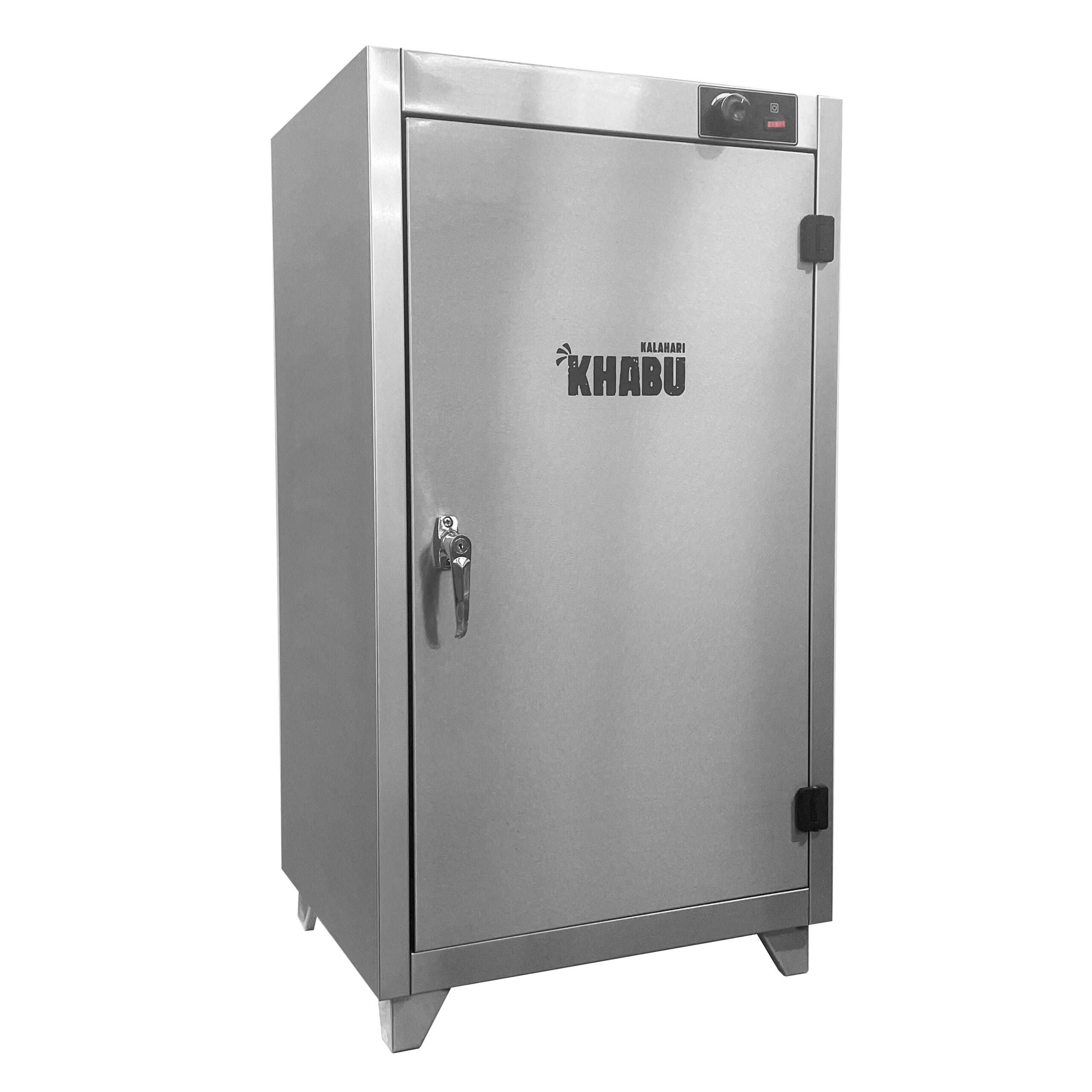
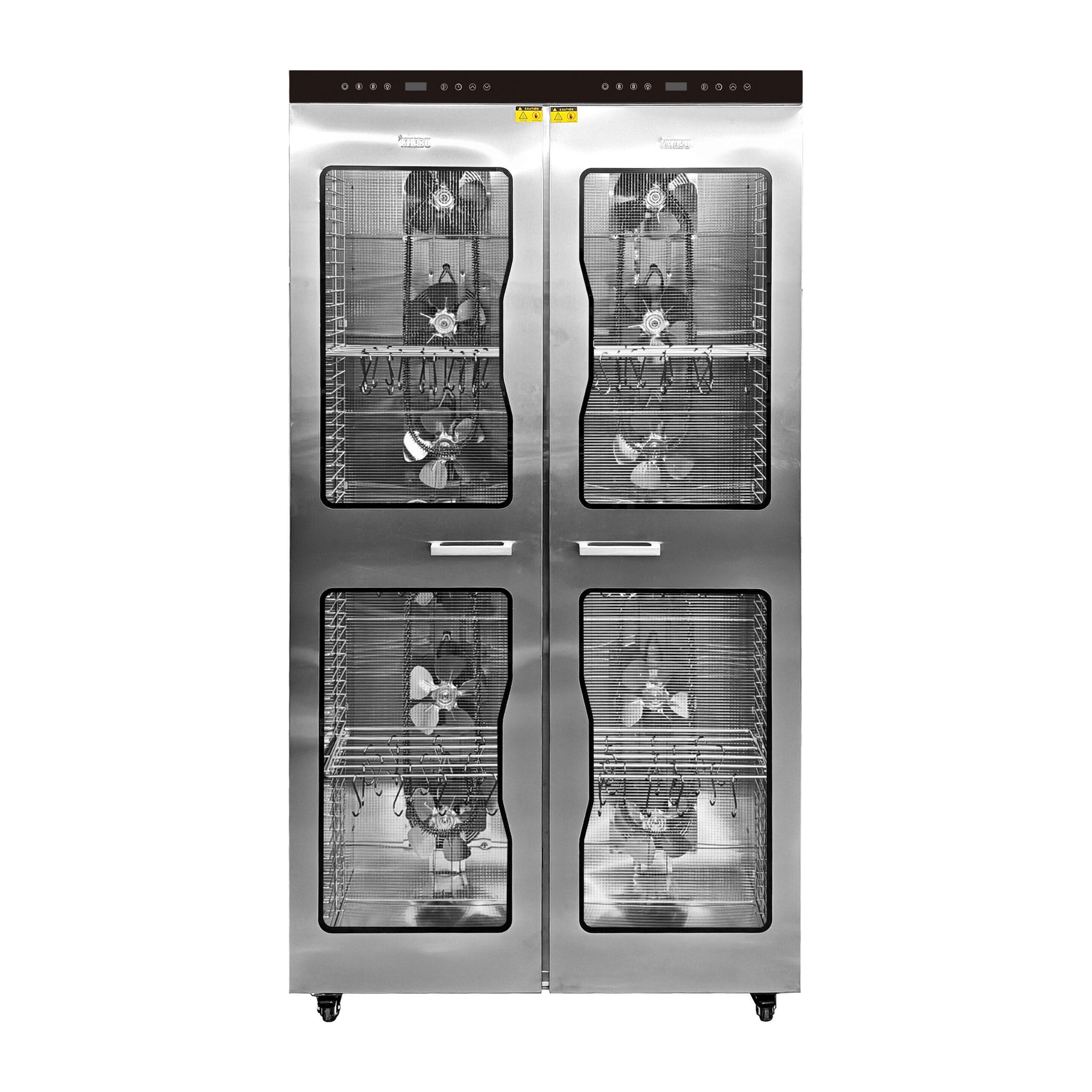
| Machine | Price | Profit per batch | Batches to pay for it |
|---|---|---|---|
| KK25 | $1,995 | $500 | 4 |
| KK40 | $3,495 | $800 | 5 |
| KK116 | $6,995 | $2,400 | 3 |
| KK120 | $6,995 | $2,400 | 3 |
Paying for it
Payment plans are available on commercial machines. I go through the options with you on the call, including the deposit and what it works out at against the machine you actually want. We do not publish the terms.
“I do not have the staff hours for this.”
That is the right question, and here is the answer.
My team comes to you
One working day on your premises. In under six hours your first batch is in the machine. We prepare the meat with your staff, mix the spices, get the marinade right, load it, set your production and train everyone who will run it.
One to two hours a batch
Somebody prepares and hangs it, then comes back a few days later to slice and pack. In between, the machine runs itself. If the power cuts out, it picks up where it stopped.
Travel only
Flights, accommodation if it is needed, and reasonable expenses. Everything else is included.
Same team, same meat. Nobody works a new shift.
Two options, same price. Your product range decides it.
The traditional one
The meat hangs, the air moves gently, four full days. If your customers judge biltong the way a South African family does, this is the one.
The retail one
116 trays. Snapsticks, leaves, nuggets and small snack packs come off in about 24 hours. Built for packaged retail volume.
One machine, nine products off it.
One product line, bolted onto a business that already works.
Butchers do not come unstuck on the machine. They come unstuck on building a range, on what the records look like when the verifier turns up, and on pricing something they have never sold before. Six things come with every commercial machine to cover exactly that, worth $X,XXX in total.
Worried about the disruption?
We come to you for one working day and your team is producing on their own by the time we leave. Under six hours to your first batch, with your staff trained on it rather than watching.
Worth $XXX · included
Worried you do not know how to build a product range?
Breaking down a carcass and building a branded range are two different jobs. Most butchers have never had to do the second one. We do it with you, and we help you build a flavour only your counter sells.
Worth $XXX · included
Worried the margin will not hold up on your costs?
We work it out on your carcass cost and your shelf price before the machine ships. Not on an example. Volumes, yields, batch rotation and a weekly schedule that fits around the shifts you already run.
Worth $XXX · included
Worried about outgrowing it?
10% off any machine you buy later, with no expiry. Keep the first one for overflow at peak or dedicated to one product, or sell it on and put the money towards the bigger unit.
Worth $XXX · included
Worried about your food control plan?
Adding biltong is an amendment to the plan you already hold, not a new one. We give you the batch records, the tracing and the cleaning procedures, and they drop into what you already run.
Worth $XXX · included
Worried about downtime?
A machine that stops is production that stops. Unfilled orders, and customers buying from someone else that week. We are on the phone and on email for repairs, parts, settings and troubleshooting.
Worth $XXX · included
Why it all comes in the price
I could sell you a machine and leave you to it. Plenty of people do.
A machine only makes money while it is producing, and what stops people producing is never the machine. It is the paperwork, the pricing, the second product, and that first batch with nobody standing next to you.
So the help is built into the product instead of sold beside it. That is part of why these cost what they cost, and it is why I would rather you rang me than clicked buy.
Warren
Kalahari Khabu
- Batch records and tracing for your food control plan$XXX
- Range building and a flavour only your counter sells$XXX
- One working day on site, your staff trained$XXX
- Margin worked on your carcass cost and your shelf price$XXX
- 10% off any machine you buy later, no expiryNo expiry
- Phone and email support from people who have run theseIncluded
- The KK40 itself$3,495
You pay $3,495 for the machine. The rest comes with it.
A buyer asks the same five things, every time.
- 01What is your batch size, and can you hold it
- 02What do your production records look like
- 03What is your shelf life, and how was it tested
- 04What is your unit cost if they double the order
- 05Who else stocks you
Every one of those has an answer once the machine is running and the records are set up. The operators who walk out with a yes are the ones who had the answers ready before they walked in. I go through all five on the call.
Questions operators ask me.
Where does it actually go?
A KK40 takes about the footprint of a small chiller. We go through positioning, power and ventilation with you before it ships.
Why not just buy biltong in and resell it?
Because then you are on a reseller's margin, on someone else's brand, at a price they set. Making it puts both the margin and the brand on your side of the counter.
My customers are not South African.
Then you are not selling them nostalgia. The same machine makes snapsticks, jerky and nuggets, which sell as a high protein snack rather than a homeland product. We work out your range on the call, based on who actually walks past your counter.
Does this complicate my food control plan?
It is an amendment to the plan you already hold, not a new plan. The records and tracing templates come with the machine.
How long until it is actually producing?
One working day on site and your first batch is hanging. Your team is producing on their own by the time we leave.
What if the numbers do not work for my operation?
Then I will say so on the call. We run it on your carcass cost and your shelf price, so it either works or it clearly does not.
Do not book the call if this is what you are expecting.
- “It will run itself once it is plugged in.”
Somebody on your team has to own it. We train them, but the machine does not hire anyone. - “I can add it without touching a single record.”
It is an amendment to your food control plan, and somebody has to keep the batch records. - “I will have product on the counter next week.”
Site prep and my team's diary both take time. We move fast, but not that fast. - “The cheapest machine will do.”
There are cheaper machines. None of them come with a team standing on your floor for your first batch.
None of that sound like you? Then the twenty minutes will be worth it.
What you get, and what it costs you.
The call
Free, about twenty minutes, and there is nothing to buy at the end of it. If the numbers do not work for your operation, I will say so.
The Success Programme
Sent to you the moment you send the form, so you can read exactly what comes with a machine before we even speak. Worth $X,XXX, included with every commercial machine.
Your own numbers
Worked out live on the call, on your carcass cost and your shelf price. Not an example, and not a spreadsheet you have to fill in yourself.
What you cover
Our team's time and the work on the day are included. You cover getting us to you: flights, accommodation where it is needed, and reasonable expenses. Nothing beyond that.
The profitability case study
Sent after our call. It is confidential, it is not on the website, and it shows what every commercial machine produces in a month along with the profit at each size.
And once you own one: warranty and returns cover to be confirmed
Ready to see what it would make for you?
Four questions, then I ring you within 24 hours. Nothing to buy, and you keep the case study either way.
Every figure on this page is an estimate. Profit is calculated at $40 a kilogram of finished product, after the cost of the meat and before electricity, packaging, spice and labour, and assumes the product is sold at that margin. Nothing here is a guarantee of profit, return, compliance, export approval or audit outcome. Kalahari Khabu Limited, New Zealand.