Your hands are the reason your homemade sausages are falling apart. Fat starts to melt at 35 to 40°C, and your hands doing the mixing are often within that range.
That is how a batch of boerewors can look perfect in the casing and still fall apart on the braai. Below you will learn how to make sausages at home that hold together, and how cold the mix needs to stay while you do it.
There is also a three second test that tells you if a batch will fall apart before it goes anywhere near the braai. It is step four of the method below.
More fat won't fix it
When a homemade sausage falls apart, most people think more fat is the fix, but it often does not work.
On a long running Smoking Meat Forums thread, one home maker added extra fat, then soy protein, and still ended up with sausage he called “dry & crumbly”. A poster on the NZ Hunting and Shooting forum calls the same result “a dry uninspiring product”, and notes the mince “starts to become slushy”.
Slushy mince is not how you want anyone to describe your sausages.
The problem isn’t the amount of fat. It just melted before it could be held in place.
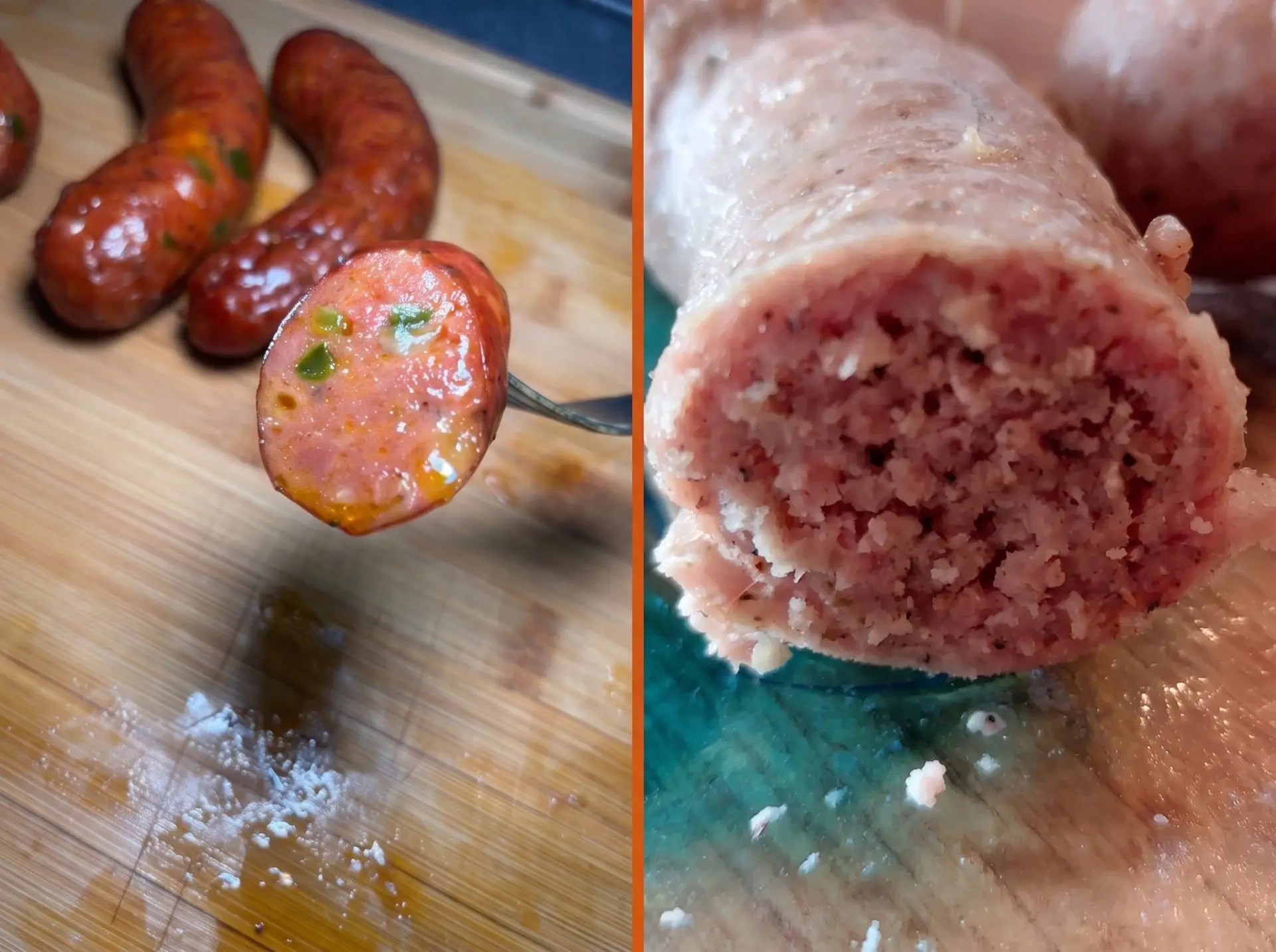
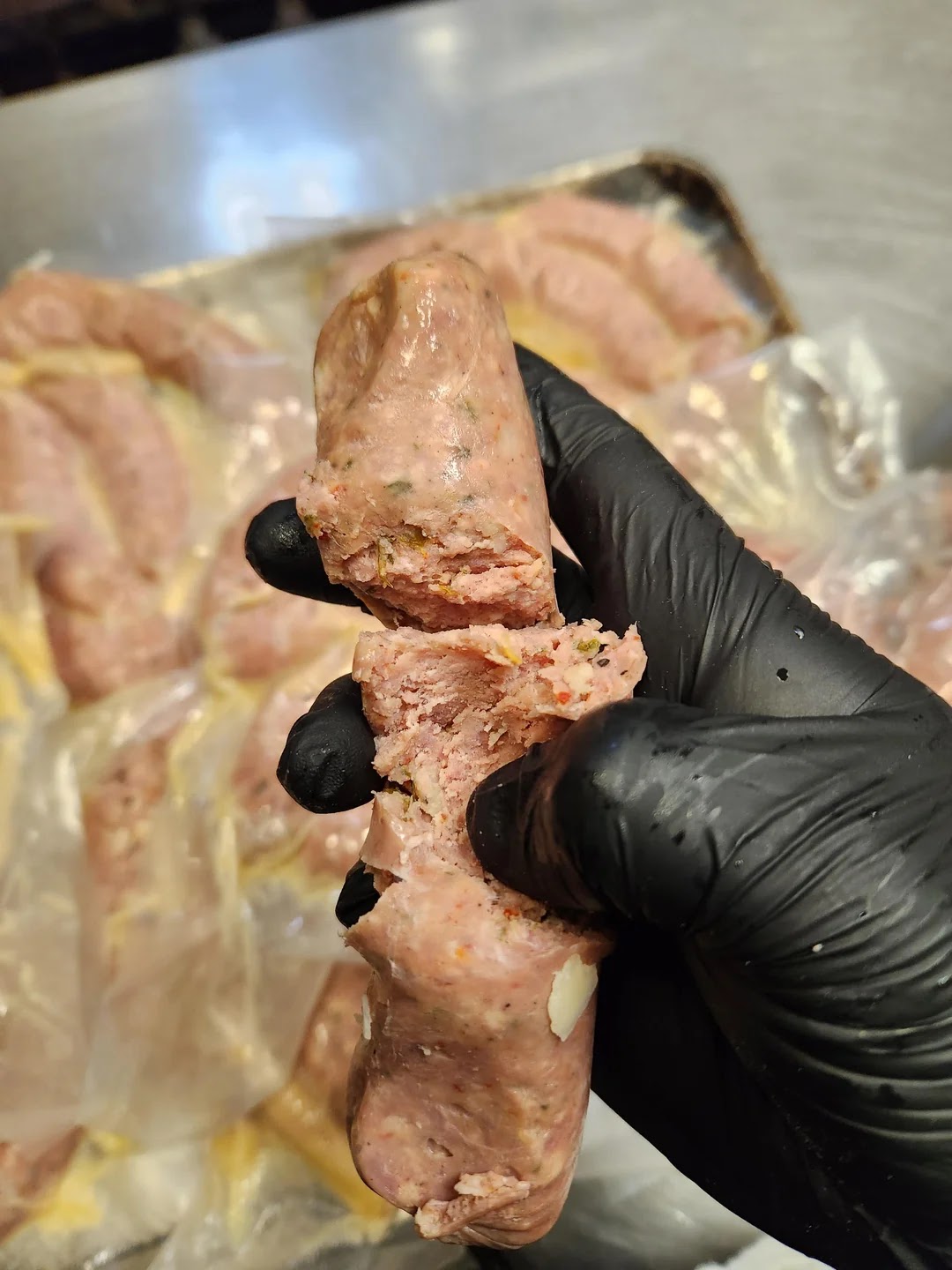
Try this: cut your next raw sausage in half. Clean white specks of fat mean the mix stayed cold. A pink, smeared look means it got too warm.
Salt is the glue, not the seasoning
Salt holds a sausage together, because it helps pull the sticky protein called myosin out of the meat, and that protein binds everything.
Myosin builds up as you mix the meat and creates the bond that holds the sausage in one piece. We suggest salt at about 2% of the meat weight, to ensure it doesn’t come out bland and mealy.
Try this: weigh your salt instead of measuring it with a spoon. At 2%, that is 20g of salt for every 1kg of meat.
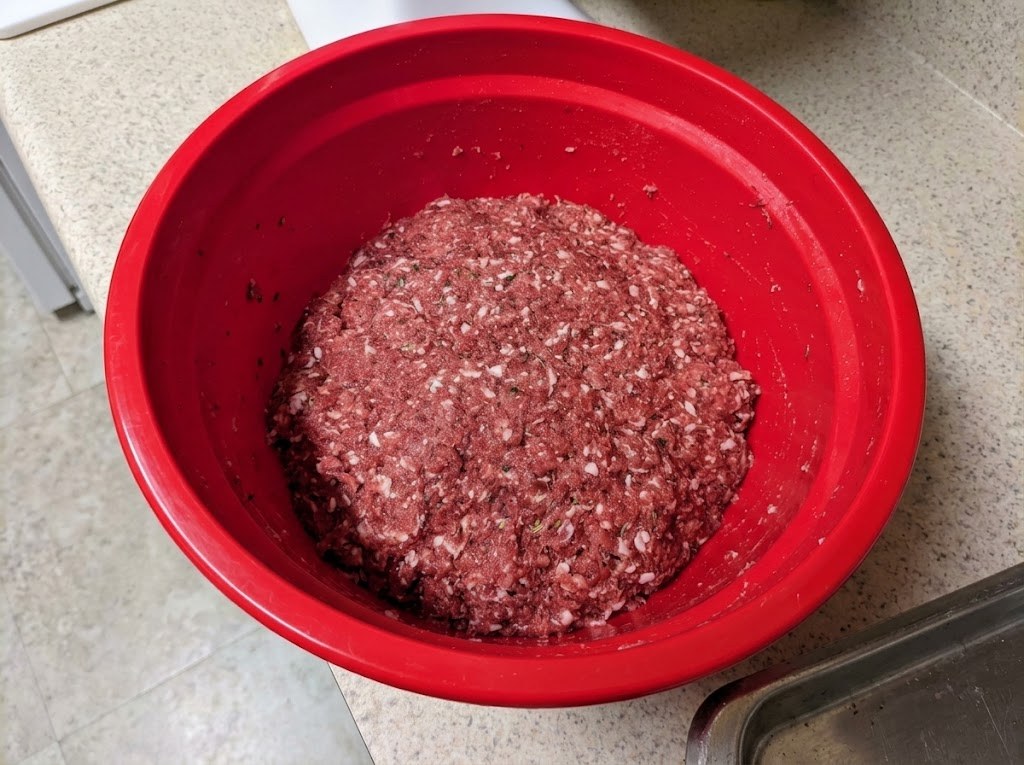
Good example
Bad example
Overwork it
Sausage mix needs hard, long mixing, which is the opposite of how most burger recipes tell you to treat mince.
Burger mince gets handled gently. Sausage mix needs the reverse. It takes a longer and more vigorous mix to build a strong bind. It works like kneading bread. You knead dough until it gets stretchy enough to hold its shape.
Try this: on your next batch, keep mixing for longer than feels right. Then check it with the three second test in step four.
Hand mixing warms sausage mix towards the point where fat melts, right when the mix needs the most work.
Your mix should stay between 0 and 5°C, and that fat starts to melt at 35 to 40°C.
The challenge is to mix the meat by hand sufficiently to develop the bind without letting your hands increase the temperature to the point of your fat turning into pink slime.
Your hands are great for a lot of things. Holding fat under 5°C is not one of them.
Try this: put a hand on the side of the bowl halfway through mixing. If it no longer feels fridge cold, put the mix back in the fridge before you carry on.
Don't just buy another grinder
A grinder only handles the first step of sausage making, and the bind is built in the step after it.
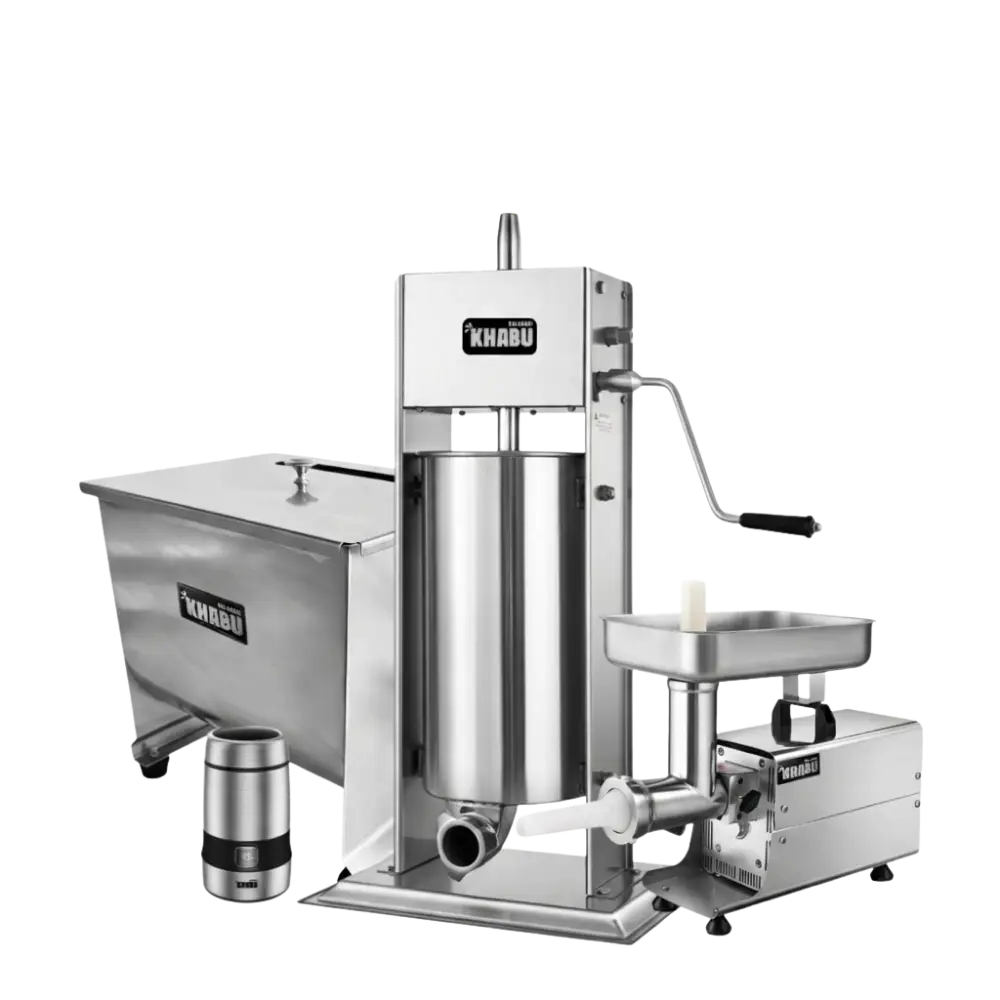
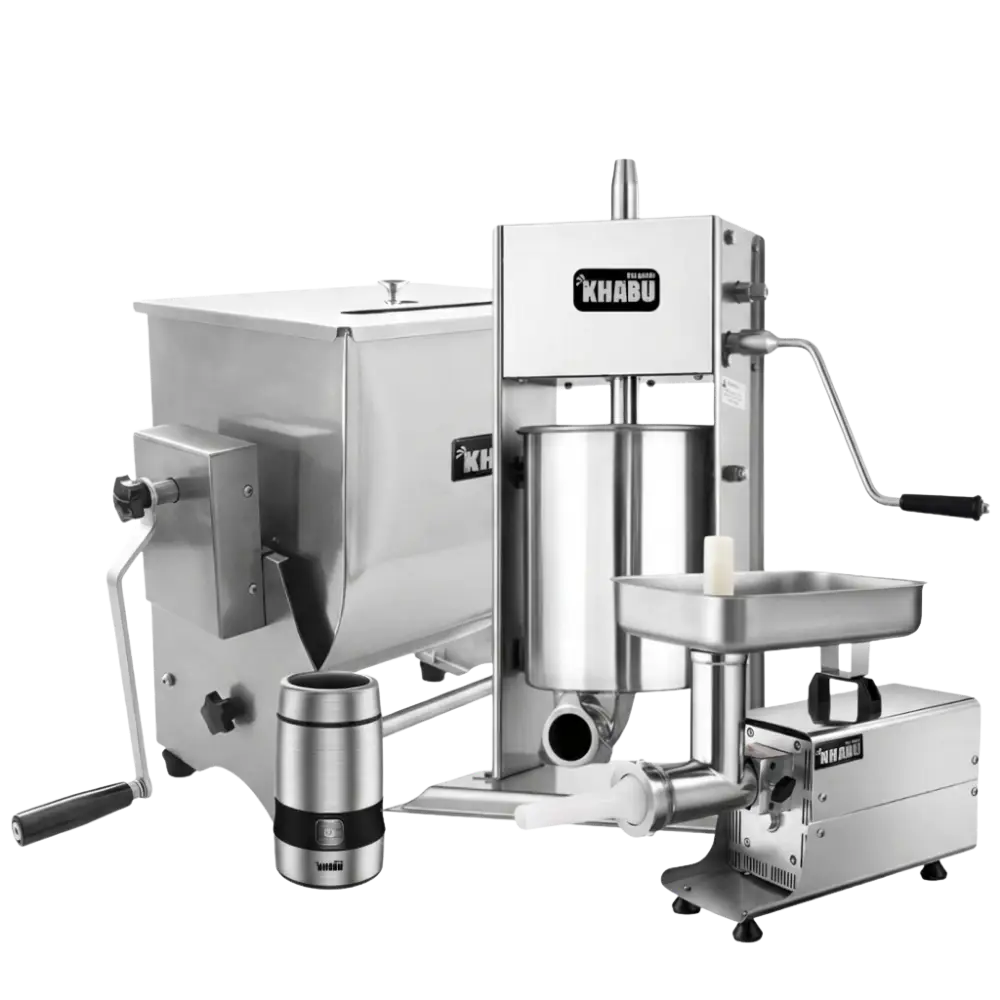
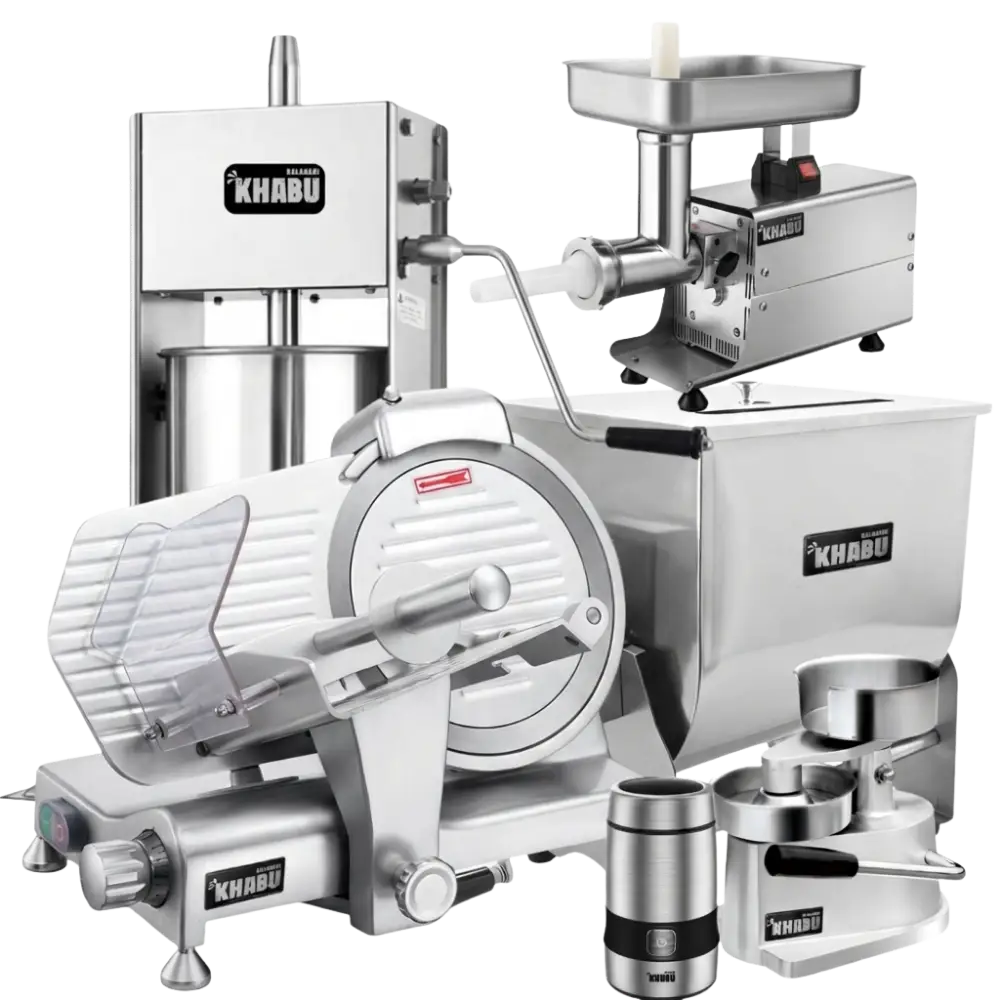
That is why KK sells sausage gear as bundles. Each one adds a mixer, a press and a spice grinder, so every step after grinding happens away from your hands.
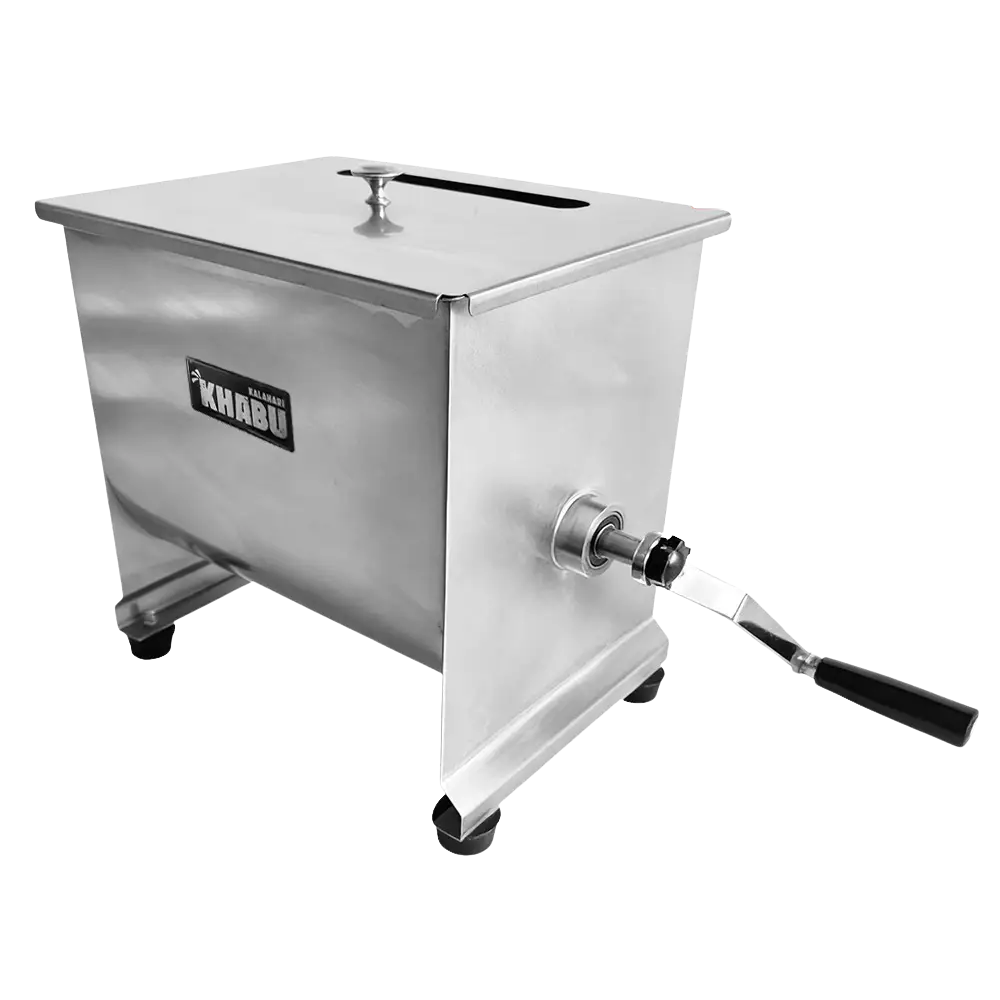
The KK Meat Mixer 13L completely eliminates this risk by taking your warm hands out of the equation. The food-grade stainless steel tub naturally helps keep your mixture ice-cold, while the hand-crank system and dual-direction paddles do all the heavy lifting.
The paddles efficiently fold and knead the meat to develop a perfect, sticky bind and evenly distribute seasonings without ever compromising the temperature of your fat.
That means the results are repeatable every single time.
Which bundle fits
KK1 Starter, $1,195: 13L mixer and 5L press, for family batches
KK2-Pro, $1,395: electric grinder, 26L mixer and 10L press, for venison season
KK3-Premier, $2,295: the KK2 kit plus a slicer and patty press
Try this: count the steps where your hands are in the meat. Each one warms the fat.
How to make boerewors
01
Cube the meat and fat, then chill in the freezer until the edges firm up without freezing solid.
02
Weigh the seasoning accurately. For an unsalted spice blend, add 20g of salt per kilogram of meat and fat. If your blend already contains salt, adjust accordingly.
03
Mix the salt and spices evenly through the chilled cubes, then mince through a coarse plate for a traditional boerewors texture.
04
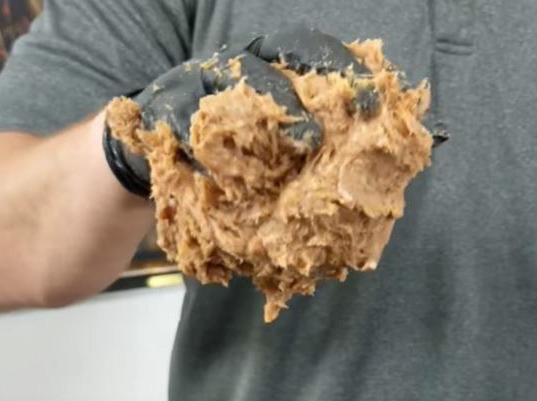
Gently mix until the mince starts to bind. Press your palm into the mixture and lift it. If it clings for around three seconds, you have some bind. Avoid overmixing it into a paste.
05
Keep the mixture cold throughout. If it starts warming up, return it to the fridge before stuffing.
06
Fry a small test patty to check the seasoning and texture. Make any adjustments before filling the casings.
07
Fill the casings evenly, avoiding air pockets. Leave enough give to coil the boerewors without splitting the casing.
While the exact ratio is recipe dependent, a good rule of thumb is between 20 – 30%. If you are hitting these numbers than the fat quantity isn’t causing your sausages to become a dry and crumbly mess after cooking.
The short version
Dry and crumbly sausage have a weak bind and adding more fat isn’t always the answer (Keep your fat to mixture ratio between 20 – 30%). You need to develop the protein bind by mixing the recipe thoroughly with enough salt, while keeping the temperature between 0 – 5°C.
Elevate your homemade sausages from dry and crumbly to perfectly textured and juicy with the KK Meat Mixer 13L, designed to deliver a flawless, ice-cold bind in every batch.
From $1,195. Free shipping anywhere in New Zealand. 12 month warranty on the working parts.