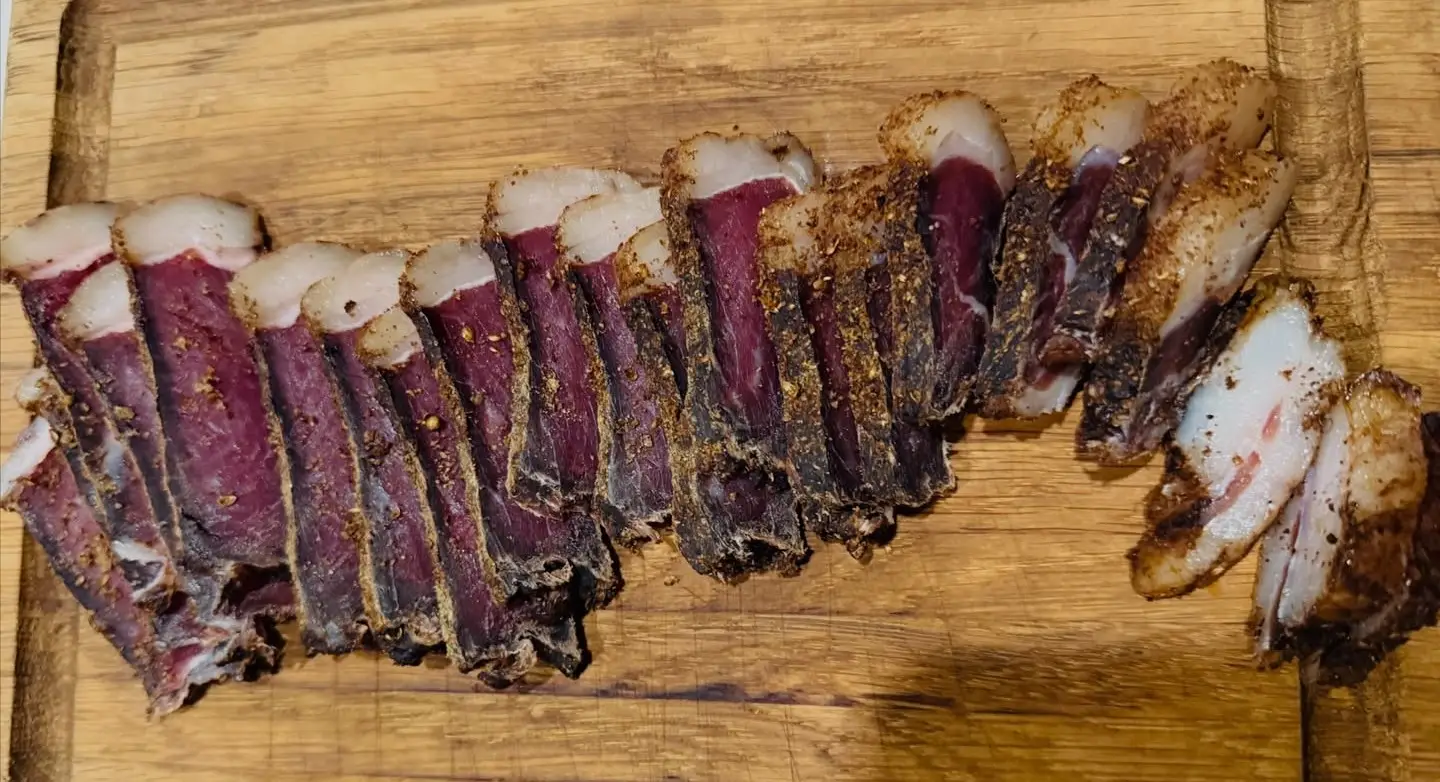
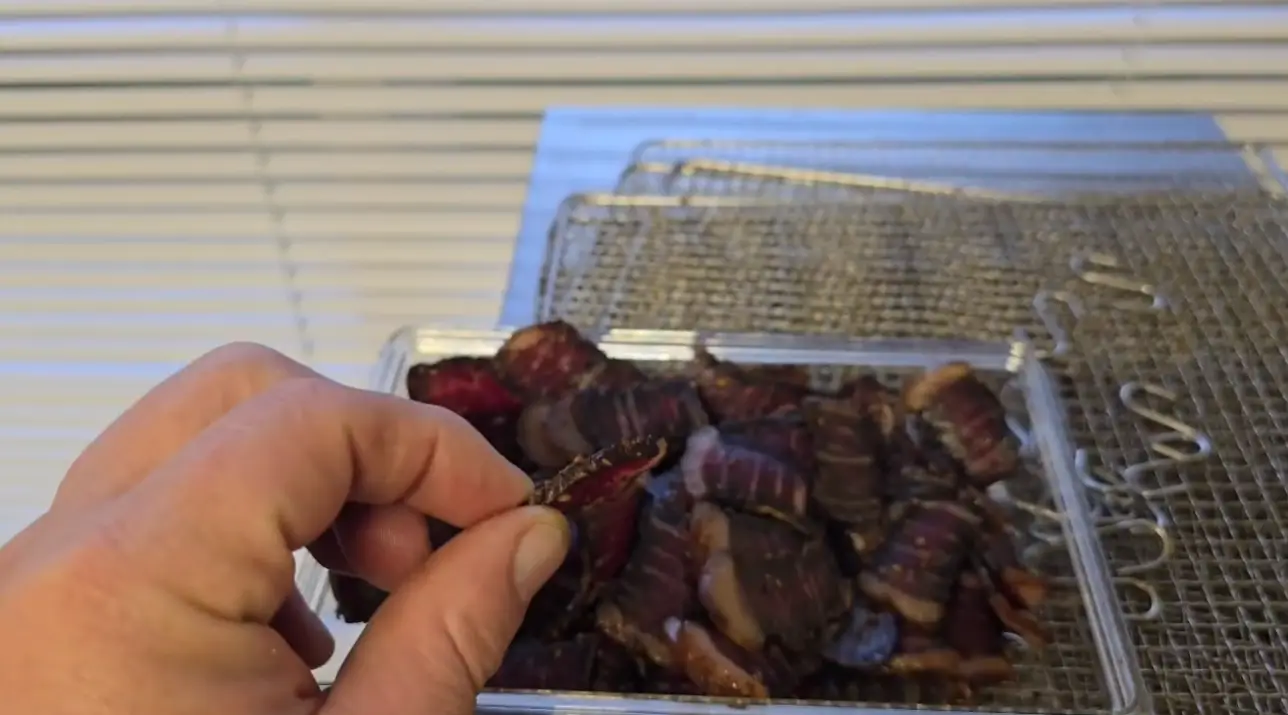
Slices that look as good as they taste the kind you fan out, not pile up.
The same thickness every time
Your call, every cut not whatever the knife decides on the way down.
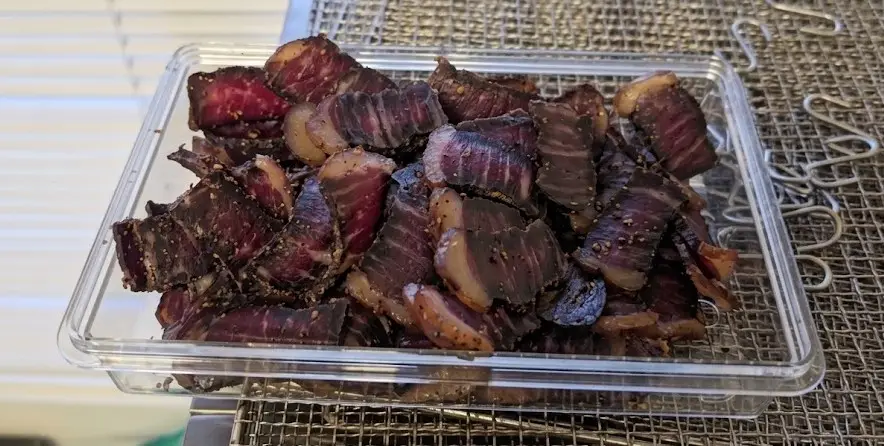
Biltong, not dust
A cutting board with biltong on it, no crumbs, no ragged chunks, no waste.
BEEN THERE?
I spent three batches blaming the meat before I looked at the knife
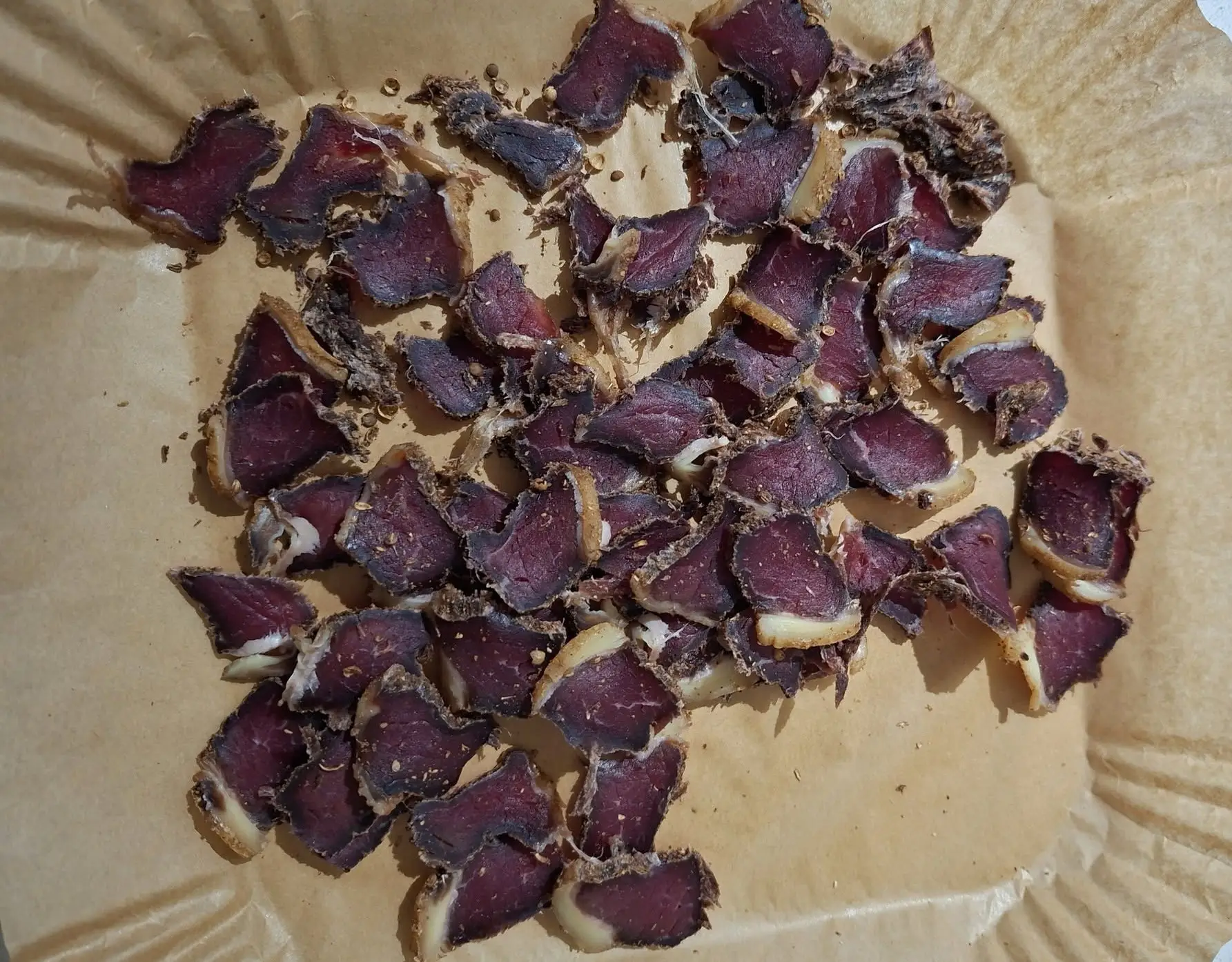
I pulled a slab out of my KK12 last month. Four days of drying, good colour, the kind of slab you want to show somebody before you eat it. Then I grabbed my carving knife, pressed down, and watched the first slice produce a ragged, uneven slice of biltong.
This has happened to me more times than I care to admit. Good biltong, sharp knife, bad result. I kept thinking I was drying it for too long or cutting at the wrong angle. I tried different knives, I tried wetting the blade, I even tried a bread knife. Nothing gave me the thin, clean slices I was after.
It was never the biltong. Nobody taught me that the tool was the problem.
Good biltong, sharp knife, bad result — the board tells the story.
WHY IT TEARS
What happens to muscle fibre when you dry it for four days
When silverside goes into the cabinet at 20 to 30 degrees, it starts as meat that is roughly 75% water. Over three to four days, about half the total weight leaves as moisture. A 2017 review in the South African Journal of Animal Science confirmed biltong is typically dried to 50% weight loss or more. What stays behind is contracted muscle fibre, packed much tighter than it was raw.
Always follow food safety guidelines for your region.
That is what your kitchen knife is trying to push through. The fibres have contracted, the collagen around them has stiffened, and the whole slab resists a flat blade in a way raw meat never did. When you press straight down, the blade compresses the fibres before the edge can separate them. The meat tears instead of parting cleanly. It gets worse the drier the biltong gets.
Think of it like cutting a block of hard cheese with a butter knife. The cheese does not slice. It fractures. Dried biltong does the same thing when the blade pushes rather than draws.
Pressed with a knife: compressed, ragged edges.
Drawn through the slicer: fibres separated, edges clean.
DO THE MATHS
What that compression costs you
NZ silverside runs about $21.99 per kilogram right now. Two kilograms of raw meat goes in, roughly one kilogram of biltong comes out. That is about $44 of beef concentrated into every kilo of finished product.
When a kitchen knife turns part of that into uneven chunks, you are not losing the biltong — it will still taste great. However, nothing beats the perfect slice of biltong, especially one prepared by your own hand.
The blade draws across instead of pressing down — a completely different cut.
THE THICKNESS REVELATION
The part I did not expect
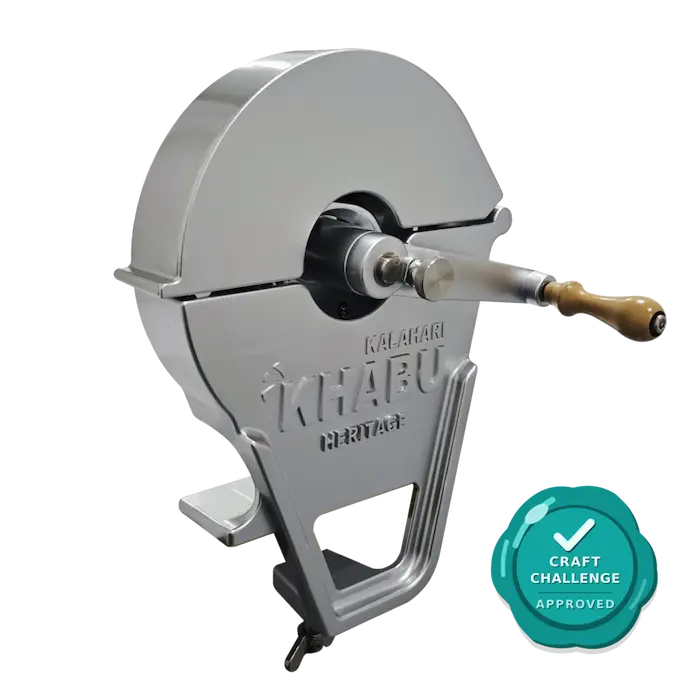
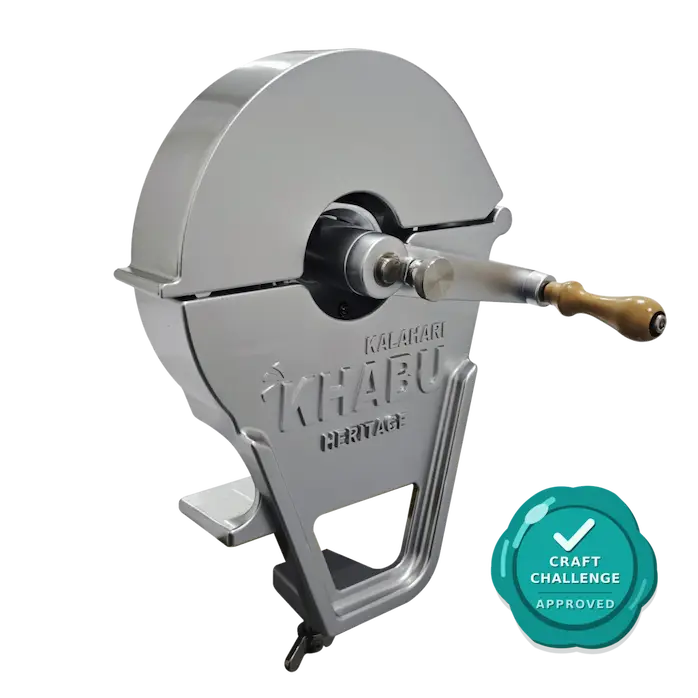
I bought the Heritage Biltong Slicer mostly because I found cutting the finished biltong tedious. What I did not expect was how much the thickness changes the way biltong eats.
At 2mm, biltong is thin. It almost dissolves on your tongue. At 8mm, you get a proper chew. At 18mm, you are tearing off chunks you can take your time with. I had been eating my biltong at whatever thickness my knife felt like giving me. I had no idea what the thin end of the range tasted like until I had the Heritage Slicer.
A kitchen knife cannot hold 2mm on dried meat. Even a sharp one drifts to 5 or 6mm because you are pushing through dense, resistant fibre. The slicer clamps to the bench, holds the slab in a 70mm feed opening, and the blade draws across instead of pressing down. That drawing action separates fibres instead of compressing them. It is a completely different cut.
THE SPEC SHEET, IN PLAIN ENGLISH
What the Heritage Slicer actually gives you
Adjustable from 2mm paper-thin to 18mm hearty chunks — your call, every time.
A 70mm feed opening that takes a standard biltong slab without trimming.
Precision hardened steel blade with a protective hood cover for your fingers.
Clamps to any bench or table up to 45mm thick — no wobble.
For dried biltong only, not raw meat. This goes after your cabinet, not before.
The thin end of the range — 2mm slices a kitchen knife can't hold.
SAVE THIS ONE
A quick test you can try with your next slab
Before you slice your next batch, try this. Cut one piece by pressing your kitchen knife straight down through the slab. Put it on a plate. Then cut a second piece with a long, smooth drawing stroke across the same slab. Compare the edges.
The straight-down cut: rough, ragged edges.
The draw cut: cleaner. That difference is compression damage.
A dedicated slicer removes it from every single cut.
NO HARD SELL
Being straight about this
A kitchen knife works. It always has. If you are happy with rough chunks, there is nothing wrong with that at all. The slicer is for the person who wants thin, even slices for a platter, who wants the same thickness every time, or who got tired of cutting through biltong slabs. It is not a beginner tool. It is the piece that finishes your craft and elevates it to new heights. If you know, you know.
You already put the days into drying it right. Use the Heritage Biltong Slicer and give the last step the same care you gave the first.
Before your next batch
Which spice flavour is right for you?
Six authentic blends compared — from clean Jäger to bold Shisa.