
Why Steakhouse Dry-Aged Beef Tastes Better Than Your Butcher’s (And How to Fix It)
It wasn’t always the case. Something changed around 50 years ago which changed the way ageing was done.
It wasn’t done to make a better product. It was done to give the butcher better margins.
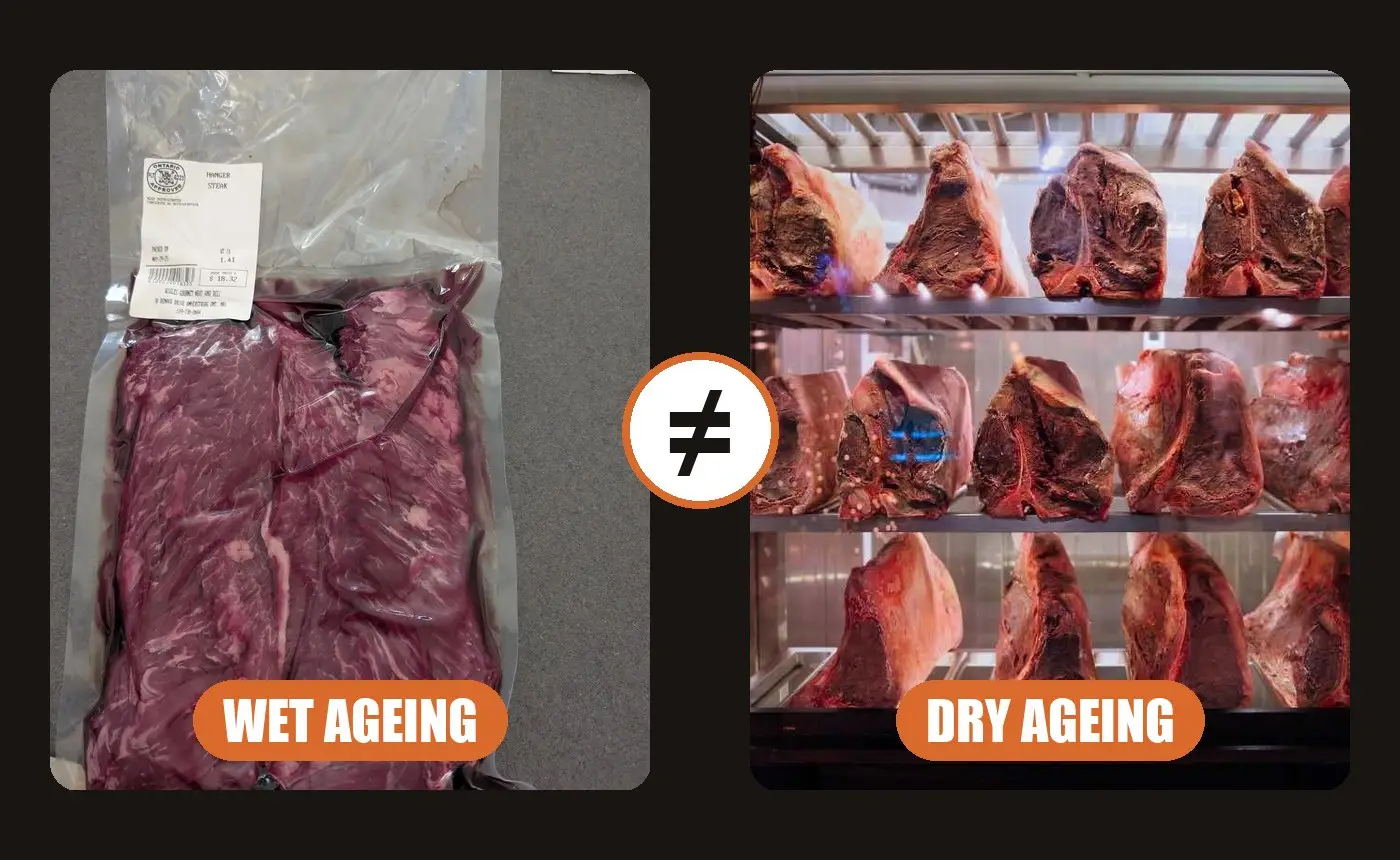
It’s called wet ageing.
Take a 10kg beef rib and put it into a vacuum bag. Three weeks later it comes out at close to 10kg. It has a milder, more straightforward flavour than traditional dry aged meat and is slightly more tender but what got them was that the weight stays the same.
That’s fantastic for the butcher… but not so great for the end customer.
Because when we describe the flavour as “mild and more straightforward,” we mean compared to the pronounced, nutty flavours of traditional dry-aged beef.
So it comes as no surprise to learn that a 2016 review in the Journal of Animal Science and Technology found most beef in food stores is wet aged in vacuum packs, with only a small amount being dry aged.
We think there is an opportunity for butchery’s to buck the trend and separate themselves from the pack.
Keep reading to see how we solved the economics of traditional dry ageing.
Why did butchers stop dry ageing beef?
Because traditional dry ageing methods lose water weight over time.
Dry ageing usually costs 6 to 15% of the weight through drying, and trimming the dry crust takes up to 24%.
Butchers call this shrink.
But that’s a good thing
Flavour Concentration
Wet ageing (vacuum-sealed) tenderizes the meat but traps the moisture and blood, sometimes leaving a slightly metallic or sour note. Dry ageing evaporates the water, intensely concentrating the deep, nutty, earthy, and umami flavours of the beef.
Textural Superiority
The natural enzymes break down connective tissue far more effectively in a controlled dry environment, leading to a buttery, melt-in-the-mouth tenderness that wet-aged meat simply cannot replicate.
It works like reducing a sauce on the stove. Simmer off the water and what is left in the pan tastes stronger. Dry ageing does the same thing in cold air, over weeks.
And when your mouth starts to water at the thought of an aged steak from a restaurant the taste you’re thinking about is dry aged steak.
That was the standard until about 50 years ago. Then vacuum packing arrived.
It won because of economics, not because it is a better product.
So what can you do about it?
Stand out from the crowd
At Kalahari Khabu, we believe that technology can make traditional methods more affordable.
We saw an opportunity to solve the ageing problem by solving the economic and floor space constraints of dry ageing.
And we took it one step further by looking for a solution for the home as well.
Because most butcheries are taking shortcuts so now is the perfect time to go back to the way things were.
Here is what we looked for when designing our Classic Ager:
- A temperature held between 0 and 4°C for optimal ageing
- Humidity you can set (the research shows that 75 to 80% is ideal)
- Steady airflow around every cut, with no dead spots
- Room to rack or hang cuts apart, so air reaches every side
- A dedicated unit so it only opens for managing the aged cuts, not other purposes
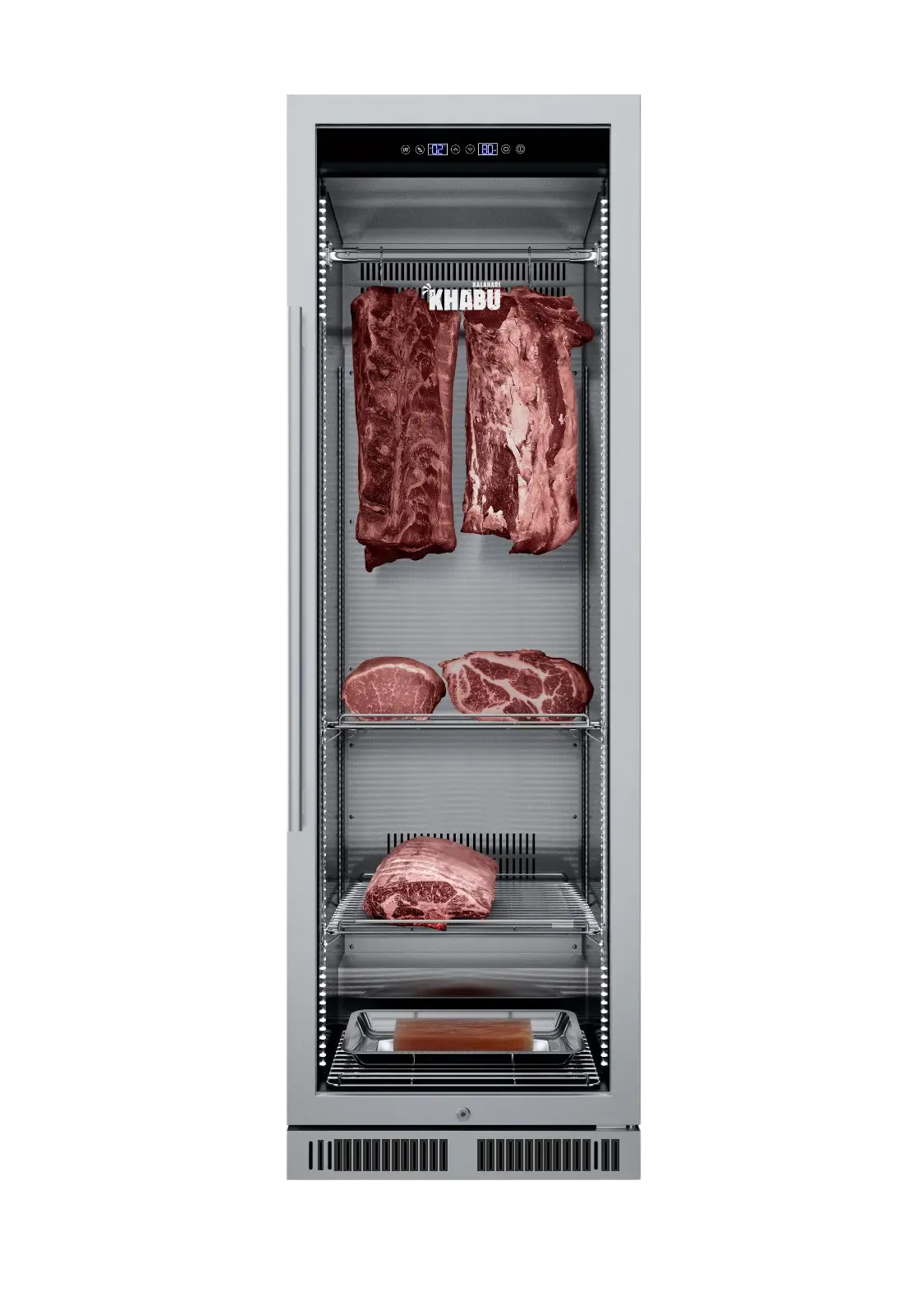
Introducing the KK Classic Ager 415L
This is the dedicated ageing system needed to solve the ageing method debate.
It is built to separate you from the competition by offering a premium offering.
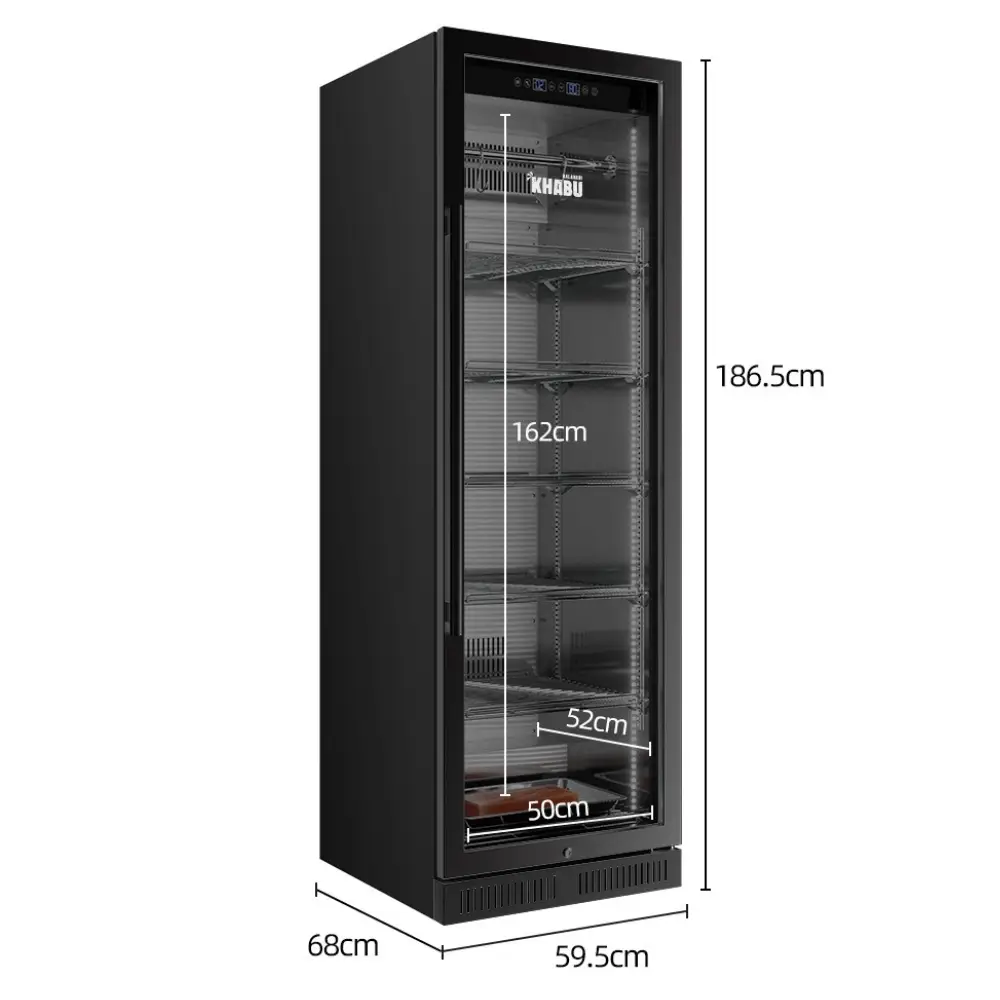
| Specification | Details |
|---|---|
| Capacity | 415 Litres |
| External Dimensions | 68cm × 59.5cm × 186.5cm |
| Internal Usable Height | 162cm |
| Internal Shelf Area | 52cm (W) × 50cm (D) |
| Temperature Range | 1°C – 22°C |
| Humidity Range | 50% – 85% RH |
First
The economic case
We built this machine based on real world numbers and the goal isn’t just to sell high priced meat. The KK Classic Ager 415L is about maximising gross profit yield per kilogram of raw input.
While dry ageing reduces saleable product weight through moisture evaporation and outer pellicle trimming, the market price premium commanded by artisanal dry-aged beef far outpaces the loss in yield. The result is a substantial increase in gross profit dollars and gross margin percentage per primal cut compared to traditional wet ageing.
Wet Ageing vs. Dry Ageing
(Based on a standard 10 kg Whole Scotch Fillet / Ribeye Subprimal in the New Zealand Retail Market)
| Metric | Option A: Standard Wet Ageing | Option B: 35-Day Dry Ageing (KK 415L) | Variance / Delta |
|---|---|---|---|
| Initial Weight | 10.0 kg | 10.0 kg | – |
| Wholesale Input Cost ($30/kg) | $300.00 NZD | $300.00 NZD | $0.00 |
| Usable Saleable Yield | 9.7 kg (3% standard trim) | 6.7 kg (33% total shrinkage) | -3.0 kg (-31%) |
| Average NZ Retail Selling Price | $58.00 NZD / kg | $115.00 NZD / kg | +$57.00 NZD / kg (+98%) |
| Total Gross Revenue | $562.60 NZD | $770.50 NZD | +$207.90 NZD |
| Gross Profit Dollar Amount | $262.60 NZD | $470.50 NZD | +$207.90 NZD (+79%) |
| Gross Margin Percentage | 46.7% | 61.1% | +14.4% Margin Expansion |
Annual Gross Margin Impact:
Running the cabinet at full operational capacity across 10 annual cycles generates $8,316.00 NZD in incremental gross profit compared to selling the same prime cuts under a standard wet-aged model.
Second
Premium offering
Dry-aged beef serves as a powerful halo product for the shop. It draws in high-value, quality-conscious customers specifically for a specialty item, driving overall foot traffic and lifting sales across every other department.
This is a key way to win the battle of standing out from the competition. Both butcheries and supermarkets deal almost exclusively in wet-aged beef due to the yield efficiency. Having a premium dry-ageing cabinet operating on the shop floor acts as a massive visual draw.
With the KK Classic Ager set up on the shop floor your customer can physically see the artisanal process happening. It elevates the shop from a standard butcher to a premium meat purveyor, driving curiosity, foot traffic, and brand loyalty.
It’s time to opt out of the price war on primary products and start offering exclusive value adding products like dry aged meat (and biltong, jerky, snap sticks, wagon wheels and aged cheeses while we’re at it).
Home offering
We promised that the home market could now get access to traditional dry aged steak as well.
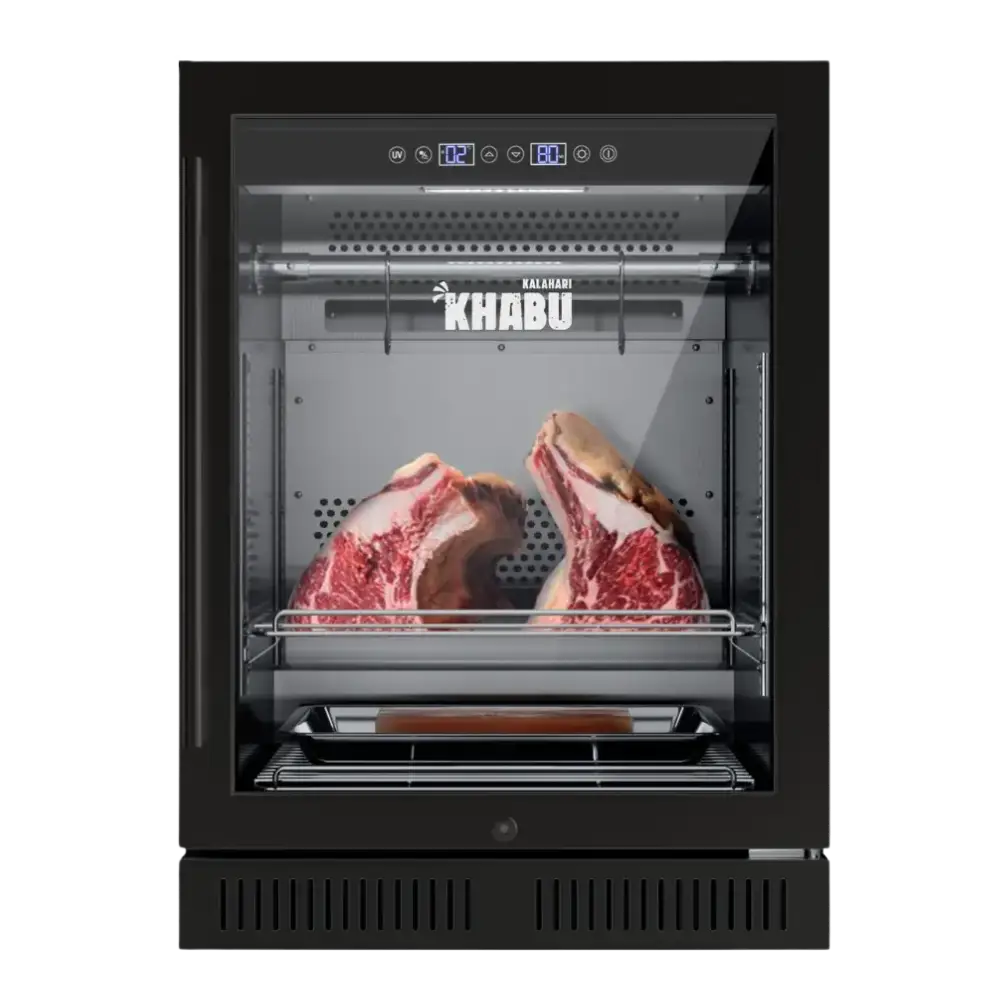
That’s why we developed the smaller KK Classic Ager 125L version.
It has the same bells and whistles as the bigger brother with less capacity and price.
So much of what we talked about here comes down to customer choice.
At the end of the day butcheries and supermarkets aren’t offering the real experience.
That means that the only way people have been able to enjoy aged meat is at restaurants.
Which is fine, except it is incredibly expensive and a rare treat.
The KK Classic Ager 125L is how you unlock restaurant quality at home.
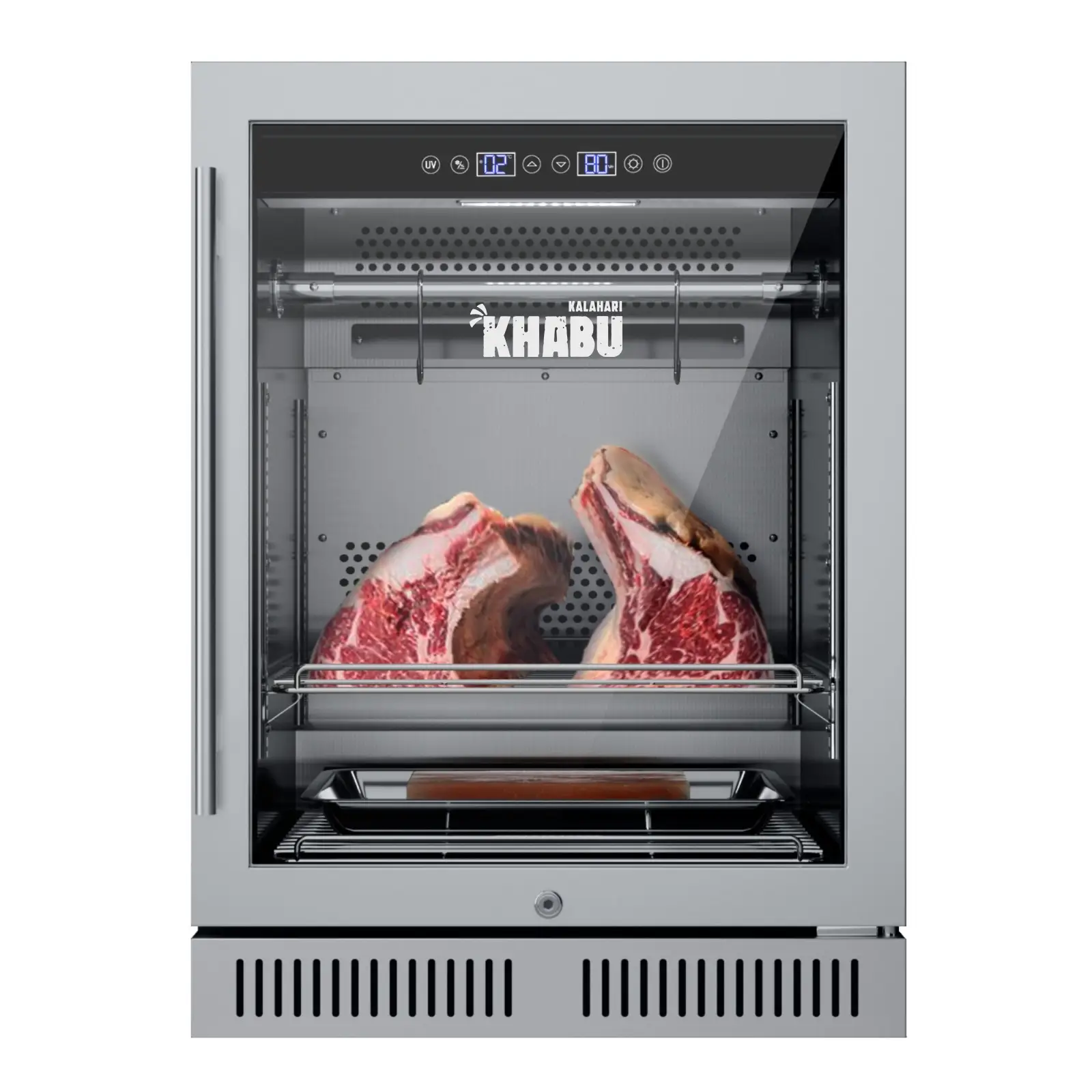
| Specification | Details |
|---|---|
| Capacity | 125 Litres |
| External Dimensions | 59cm × 59.5cm × 82cm |
| Internal Usable Space | 44cm × 47cm × 57cm |
| Temperature Range | 1°C – 22°C |
| Humidity Range | 50% – 85% RH |
With this capacity you can age multiple cuts at once. Stagger timelines. Keep a rotation going. Instead of saving up for one dinner, you can create a steady supply of flavour developing in the background.
Plus it means you can save your freezer space and use the time to develop a memorable meal for friends and family instead of ice crystals.
How to start a dry ageing run this week
Choose well marbled cuts on the bone. Bone in loins lose less weight than boneless ones.
Set 1 to 4°C and 75 to 80% humidity is recommended.
Rack cuts fat side down or hang them, spaced apart.
Record the temperature and humidity daily.
Plan on 28 days or more.
Trim the crust just before you cook.
Enjoy.
Dry ageing questions we get asked
Most dry aged cuts sit between 14 and 40 days, and many purveyors suggest 28 to 55.
Between 0 and 4°C, with humidity around 75 to 80%.
A kitchen fridge has no humidity setting, and its door opens all day, so weight loss is hard to control. And membrane bags are more of a novelty than a long term way to enjoy aged cuts.

Free shipping anywhere in New Zealand. 12 month warranty on the working parts. Local support from Matakana.